Ataşehir Mah. Feza Sk. No:3 İstanbul / Türkiye
 English

Introduction
Many patients consider a neck lift for a double chin to define their jawline. A double chin, also known as submental fullness, affects many adults regardless of weight. Genetics, ageing and weight fluctuations can all cause excess fat and skin beneath the chin. Diet and exercise do not always resolve a double chin, especially with skin laxity. A neck lift is surgery that addresses loose skin, excess fat and muscle banding. Performed by a qualified surgeon, it can significantly improve a double chin. This article explains how a neck lift works, who it suits and expected outcomes. It also covers alternative treatments, recovery timelines and key factors to consider before surgery.
What Causes a Double Chin?
A double chin develops when fat builds up or skin loses elasticity beneath the chin. Genetics play a significant role in where the body stores fat, including under the chin. Some patients inherit submental fullness even when they maintain a healthy weight. Ageing reduces skin elasticity and collagen, causing skin beneath the chin to sag. Weight gain increases fat under the chin. Weight loss may leave behind loose, redundant skin. Poor posture and repeatedly looking down may also contribute to a double chin. Hormonal changes, such as during menopause, can alter fat distribution in the face and neck. Understanding the cause helps determine whether a neck lift for a double chin is suitable. Patients with mainly excess fat may benefit from less invasive treatments first. Significant skin laxity and muscle banding often require surgery for meaningful improvement.
How a Neck Lift Addresses a Double Chin
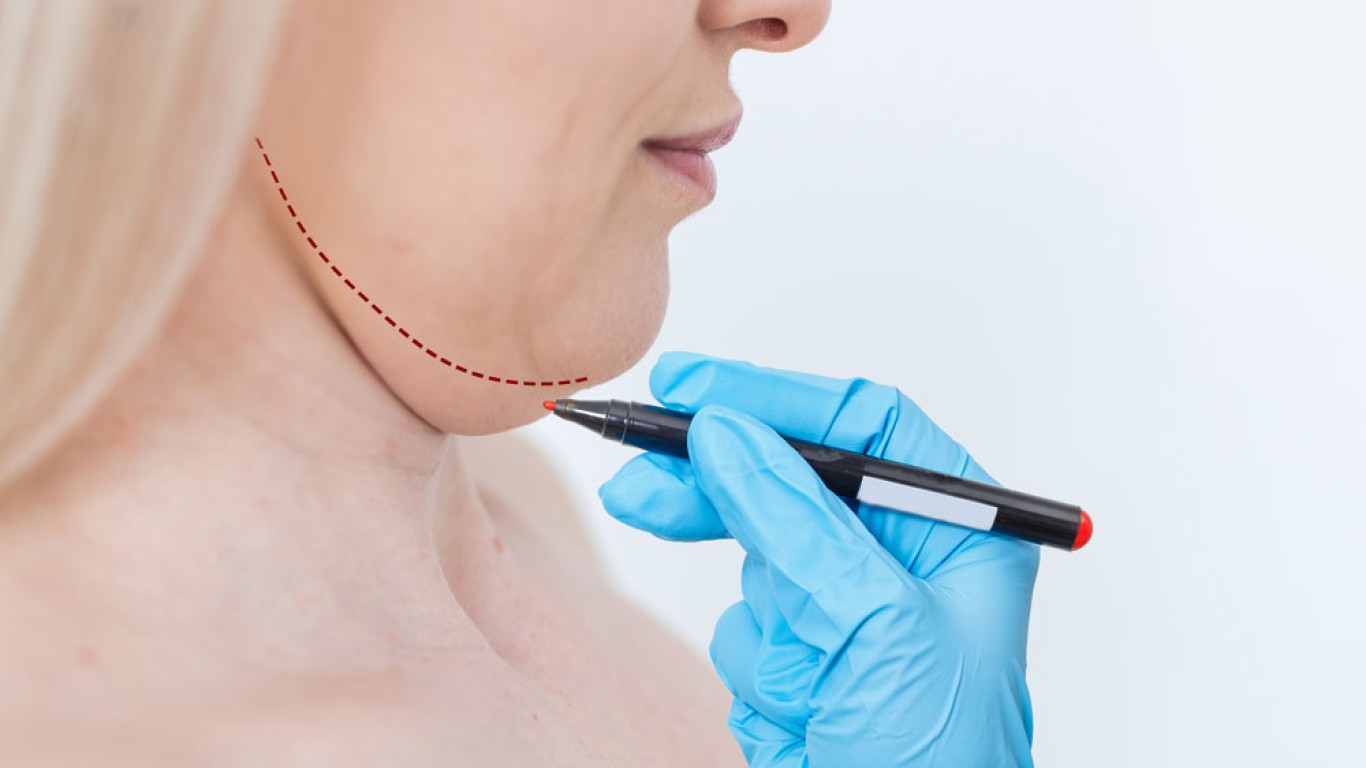
A neck lift for a double chin combines surgical techniques tailored to each patient. The procedure typically removes excess fat, tightens loose skin and repositions neck muscles. Liposuction may remove stubborn fat from beneath the chin and along the jawline. The platysma muscle runs along each side of the neck. It may be tightened to reduce muscle banding. Excess skin is trimmed and the remaining skin is redraped for a smoother contour. Incisions are typically placed behind the ears and sometimes beneath the chin. Together, fat removal, muscle tightening and skin excision create a well-defined neck and jawline. The surgeon tailors the techniques to individual anatomy and the double chin’s severity. This personalised approach targets the specific factors behind each patient’s submental fullness. For moderate to severe cases, a neck lift gives more comprehensive results than non-surgical options.
Who Is a Suitable Candidate for a Neck Lift?
Not every patient with a double chin needs a neck lift. Suitability depends on several individual factors. The following table outlines the key criteria that determine whether a neck lift is appropriate.
| Factor | Good Candidate | May Not Be Suitable |
| Skin elasticity | Moderate to significant skin laxity present | Good skin elasticity with fat only |
| Fat distribution | Excess submental fat with skin sagging | Minimal fat, no skin laxity |
| Muscle banding | Visible platysma bands on the neck | No muscle banding present |
| Overall health | Good general health, non-smoker | Uncontrolled medical conditions |
| Expectations | Realistic goals for improvement | Expecting perfection or dramatic change |

Neck Lift for a Double Chin vs Non-Surgical Alternatives
Patients should understand how a neck lift for a double chin compares with non-surgical alternatives. Fat-dissolving injections such as deoxycholic acid can reduce small to moderate submental fat. These injections destroy fat cells, which the body then naturally eliminates. Results develop gradually over several sessions spaced four to six weeks apart. Radiofrequency or ultrasound skin tightening treatments can address mild skin laxity. These treatments stimulate collagen production, gradually firming the skin over several months. However, non-surgical options have limits for moderate or severe double chin concerns. They cannot remove excess skin, tighten muscles or match surgical contouring. A neck lift provides more dramatic and longer-lasting results for significant concerns. The right approach depends on the severity of the problem and the patient’s goals.
What to Expect During a Neck Lift Procedure
A neck lift is performed under general anaesthesia or local anaesthesia with sedation. It usually takes two to four hours, depending on the extent of correction. The surgeon makes incisions behind the ears and possibly beneath the chin. Liposuction removes excess fat from under the chin and along the jawline if needed. The platysma muscle is tightened and sutured to create a smoother neck profile. Excess skin is carefully trimmed, and the remaining skin is redraped and secured. The incisions are closed with fine sutures to minimise visible scarring. A compression garment supports the tissues and reduces swelling during early recovery. The procedure is usually a day case, so patients return home the same day.
Conclusion
A neck lift for a double chin treats excess fat, loose skin and muscle banding. It creates a defined jawline and smooth neck that non-surgical treatments cannot always achieve. Suitable candidates have moderate to significant submental fullness with skin laxity. Diet and exercise have not resolved their concerns. Results typically last ten to fifteen years with good aftercare and stable weight. Patients should consult a qualified, experienced surgeon to discuss their individual goals. Professional assessment ensures the most appropriate treatment plan for each patient’s anatomy.
To find out more about neck lifts and to book a consultation visit the ACIBADEM Beauty Center Aesthetics webpage.
Frequently Asked Questions
Yes, it removes excess fat, tightens skin and repositions muscles to eliminate a double chin.
Results typically last ten to fifteen years depending on ageing, lifestyle and weight maintenance.
Most patients feel mild discomfort rather than significant pain, managed with prescribed medication.
Most patients resume light activities within seven to ten days. Full recovery takes four to six weeks.
Yes, options include injectable fat-dissolving treatments and skin tightening procedures for mild to moderate cases.