Ataşehir Mah. Feza Sk. No:3 İstanbul / Türkiye
 French
  English
  German
  Spanish
Introduction
Understanding the differences between otoplasty and non-surgical ear correction helps individuals choose the most suitable approach for ear reshaping. Although both methods refine ear position or contour, they work in very different ways. Otoplasty uses structural surgical methods to adjust cartilage. Non-surgical systems rely on external shaping or temporary support. This guide explains how each technique works, how specialists plan treatment and which individuals benefit most from each approach.
What Does Otoplasty Involve?
Otoplasty is a surgical procedure designed to reshape ear cartilage with precision. It adjusts the ear’s position, projection or fold definition. Specialists access the cartilage through a small incision behind the ear. They then reshape or reposition the cartilage to create improved balance. Otoplasty is the most effective option for lasting cartilage adjustment because it directly changes internal ear structure. It also supports improved symmetry for those with uneven projection or under-developed folds.
How Does Non-Surgical Ear Correction Work?
Non-surgical ear correction techniques do not reshape cartilage directly. Instead, they adjust ear position using external shaping devices or supportive systems. These methods reposition the ear gradually by applying controlled pressure. They suit individuals with softer cartilage or mild projection concerns. Because results rely on pressure-based shaping rather than structural adjustment, outcomes may be more subtle. The technique is most effective when cartilage remains flexible, making suitability a key factor.
Comparing Goals: Otoplasty vs Non-Surgical Ear Correction
The goals of otoplasty and non-surgical correction differ.
- Otoplasty directly alters cartilage structure for long-term refinement.
- Non-surgical methods support mild ear repositioning without surgery.
Therefore otoplasty addresses structural concerns while non-surgical correction suits minor adjustments. Understanding these goals helps individuals choose the method that matches their needs.
How Specialists Assess the Ears
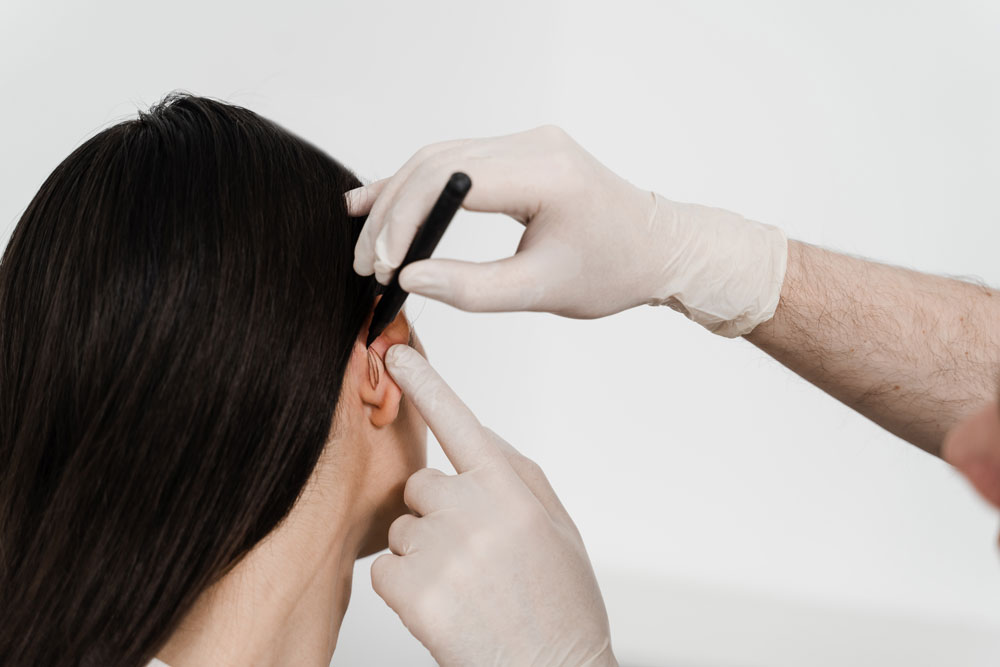
Assessment includes analysing cartilage firmness, ear projection, natural fold shape and symmetry. Specialists also measure the angle between the ear and the scalp. Additionally, digital imaging tools help map projection levels and highlight asymmetry. These measurements guide the choice between structural otoplasty and non-surgical correction.
When Otoplasty Is the Preferred Option
- Otoplasty suits individuals with pronounced ear projection or significant asymmetry.
- It also supports those with firm cartilage that will not respond to external pressure.
- Additionally, otoplasty may be preferred when natural folds require reshaping.
- Those seeking predictable, long-term refinement often choose surgical correction.
When Non-Surgical Correction Is More Suitable
- Non-surgical ear correction suits individuals with mild projection or flexible cartilage.
- It remains more effective when cartilage has not fully hardened, which supports gradual shaping.
- Specialists sometimes recommend this method when structural changes are unnecessary.
- It also suits those who prefer external adjustment rather than surgical intervention.
Techniques Used in Otoplasty
- Otoplasty uses several cartilage-shaping techniques.
- These include sutures that create or refine natural folds.
- Cartilage scoring softens cartilage so it holds a new shape.
- Projection reduction adjusts the angle between the ear and the scalp.
- These methods allow precise and tailored refinement.
Techniques Used in Non-Surgical Ear Correction
- Non-surgical approaches rely on consistent shaping pressure.
- Devices are placed around the ear to adjust position gradually.
- The pressure encourages the cartilage to follow a more refined contour.
- Digital planning helps specialists determine the required amount of shaping.
- The method works best for subtle refinements.
Technology Supporting Ear Analysis in 2025
- Technology plays a key role in modern otoplasty planning.
- AI imaging measures ear projection, cartilage curves, and symmetry.
- 3D mapping systems help specialists visualise refined ear angles.
- Ultrasound tools assess cartilage thickness before shaping.
- Non-surgical correction also benefits from digital planning models.
What Results Can I Expect From Otoplasty?
- Otoplasty provides clear structure, improved symmetry, and refined ear projection.
- Results appear once swelling reduces and cartilage stabilises.
- Final contour becomes more defined as tissues adapt.
- Because cartilage is reshaped directly, results remain stable long term.
What Results Can I Expect From Non-Surgical Correction?
- Non-surgical correction offers gentle adjustment and mild repositioning.
- Results reflect the ear’s responsiveness to shaping pressure.
- Because cartilage remains structurally unchanged, results may be more subtle.
- Outcomes depend on cartilage softness and consistency of use.
How Long Each Method Lasts
- Otoplasty provides lasting refinement as cartilage maintains its new shape.
- Non-surgical correction supports gradual adjustment that depends on cartilage flexibility.
- Long-term stability varies because the method does not reshape internal structure.
- Consistency and cartilage behaviour influence durability.
Suitability Based on Age and Cartilage Structure
- Younger individuals with softer cartilage may benefit more from non-surgical correction.
- Adults with fully developed cartilage often require otoplasty for predictable outcomes.
- Assessment ensures that the chosen method matches cartilage firmness.
- Age influences how cartilage responds to shaping, making evaluation essential.
How Lifestyle Influences Otoplasty and Ear Correction Planning
- Lifestyle patterns may guide treatment selection.
- Those seeking immediate structural refinement may choose otoplasty.
- Those preferring gradual shaping without downtime may choose non-surgical correction.
- Both methods require follow-up visits and structured planning.
Combination Approaches for Tailored Results
- Some individuals may combine subtle shaping techniques with planned contour refinement.
- Digital mapping helps specialists identify areas that need balanced improvement.
- Combination strategies depend on anatomy and desired ear projection.
- These tailored approaches support structured planning.
Conclusion
Comparing otoplasty with non-surgical ear correction highlights two distinct approaches to ear refinement. Otoplasty reshapes cartilage for long-term structure, while non-surgical methods support gradual adjustment based on external shaping. The best option for you will ultimately depend on your age, ear structure and desired results.
If you’re interested in finding out more about otoplasty and non-surgical ear correction, visit the ACIBADEM Beauty Center website.
Frequently Asked Questions
Otoplasty reshapes cartilage, while non-surgical methods adjust ear position externally.
It depends on cartilage softness and projection level.
Yes, cartilage holds its refined structure long term.
Non-surgical correction may be suitable for subtle adjustments.
Yes, cartilage analysis guides treatment choice.