Ataşehir Mah. Feza Sk. No:3 İstanbul / Türkiye
 English
Introduction
Breast sagging is one of the most common cosmetic concerns women experience. Pregnancy, breastfeeding, weight fluctuation, ageing and gravity all contribute. The medical term is ptosis. A breast lift for sagging breasts raises and reshapes the breast to a more youthful position. The nipple is elevated. Excess skin is removed. The breast contour is restored. Understanding how a breast lift addresses sagging breasts helps patients decide whether the procedure suits their concern. This article explains what causes sagging, how surgery corrects it and what results are achievable.
What Causes Sagging Breasts?
Multiple factors contribute to breast ptosis. Pregnancy and breastfeeding stretch the skin and ligaments that support the breast. The breast tissue expands during pregnancy and lactation. When it returns to its pre-pregnancy volume, the stretched skin envelope remains larger. The breast drops within this loose skin. A breast reshaping for sagging breasts addresses this mismatch between tissue volume and skin envelope. Weight loss produces a similar effect. The breast loses fat. The skin that accommodated the larger breast remains. Ageing reduces collagen and elastin. The Cooper ligaments that provide internal breast support weaken. Gravity gradually pulls the breast downward. Genetics determine how resilient these support structures are. Some women develop significant ptosis in their thirties. Others maintain firm breasts into their fifties. A breast reshaping for sagging breasts addresses the visible consequence regardless of the underlying cause.
How a Breast Lift for Sagging Breasts Works
The surgery removes excess skin and reshapes the remaining breast tissue. A breast lift for sagging breasts elevates the nipple-areolar complex to a higher, more youthful position. Breast tissue is gathered and reshaped to create a rounder, more projected contour. The excess skin that allowed the breast to sag is removed. The remaining skin tightens around the reshaped breast. A breast reshaping for sagging breasts does not significantly change breast size. It reshapes and repositions existing tissue. Patients who want larger breasts alongside correction of sagging need augmentation with lift. Those who want smaller breasts alongside correction need reduction. A breast reshaping for sagging breasts alone suits patients satisfied with their breast volume who want the shape and position improved.
Breast Lift for Sagging Breasts: Grades of Ptosis
| Grade | Description | Treatment |
| Mild (Grade I) | Nipple at or just below the fold | Periareolar or crescent lift |
| Moderate (Grade II) | Nipple below the fold but above the lowest point | Vertical (lollipop) lift |
| Severe (Grade III) | Nipple at the lowest point, pointing downward | Anchor lift (inverted T) |
| Pseudoptosis | Nipple above the fold, lower pole empty | Augmentation or augmentation with lift |
A breast reshaping for sagging breasts technique is selected based on the grade of ptosis. Mild sagging requires less extensive surgery. Severe sagging requires more comprehensive reshaping. The surgeon assesses the grade during consultation by evaluating the nipple position relative to the breast fold. This determines the incision pattern and technique. A breast lift for sagging breasts using the correct technique for the specific grade produces the most proportionate correction with the least necessary scarring.
Breast Lift for Sagging Breasts: Incision Patterns
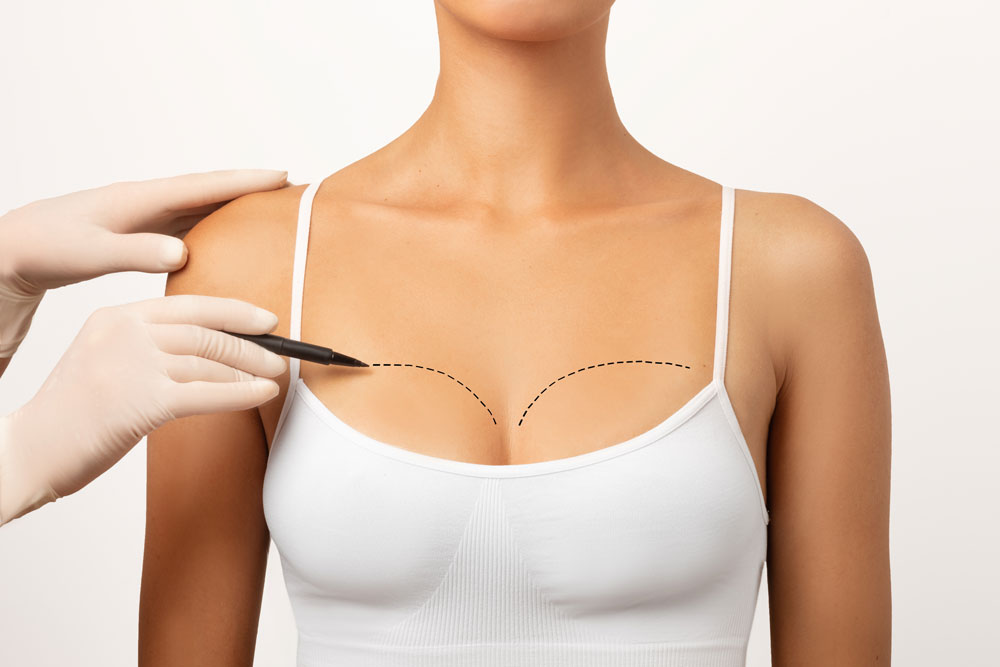
Three main incision patterns address different ptosis levels. A breast reshaping for sagging breasts at the mild level uses a periareolar incision. The scar circles the areola only. Skin is removed in a doughnut shape around the areola. The nipple is elevated slightly. This minimal approach suits early ptosis. A breast reshaping for sagging breasts at the moderate level uses a lollipop incision. The scar circles the areola and extends vertically down to the breast fold. More skin is removed. More reshaping is possible.
The breast is significantly elevated and reshaped. A breast lift for sagging breasts at the severe level uses an anchor incision. The scar includes the areolar circle, the vertical line and a horizontal line along the breast fold. This pattern allows maximum skin removal and tissue reshaping. The most dramatic correction is achieved. A breast reshaping for sagging breasts scarring is a trade-off patients must accept. The scars are permanent. They fade significantly over twelve to eighteen months. Most patients describe the improved breast shape as far outweighing the presence of scars. Clothing and swimwear conceal the scars in most situations.
What Results to Expect
Results are immediately visible. A breast lift for sagging breasts produces a higher, rounder, more youthful breast contour from the day of surgery. Swelling is present initially. The final shape settles over two to three months. A breast reshaping for sagging breasts repositions the nipple centrally on the breast mound. It points forward rather than downward. The breast appears fuller in the upper pole. The lower pole is smooth and rounded rather than elongated. A breast lift for sagging breasts results are long lasting. The reshaped breast maintains its improved position for years.
However, ageing and gravity continue. Some degree of gradual descent is natural over time. The breast will never return to its pre-surgical sagging level. A breast lift for sagging breasts results at ten years still show meaningful improvement compared with the pre-operative state. The clock is reset rather than stopped. Maintenance through good bra support and stable weight extends the result.
Breast Lift for Sagging Breasts Recovery
Recovery is straightforward. A breast lift for sagging breasts recovery involves one to two weeks of restricted activity. The surgical bra is worn for four to six weeks. Swelling and bruising are expected during the first two weeks. Pain is moderate and managed with medication. Most patients return to desk work within one week. A breast lift for sagging breasts exercise restriction applies for six weeks. Upper body activity resumes gradually from week six. Full exercise returns at eight weeks. Sleep on the back for four to six weeks. Side sleeping resumes cautiously from week four. A breast lift for sagging breasts scar management begins at two to three weeks. Silicone strips or gel applied to the incision lines improves scar quality. SPF protection prevents scar darkening. Consistent scar care produces the finest, most inconspicuous lines.
Conclusion
A breast lift for sagging breasts effectively corrects ptosis by removing excess skin, reshaping tissue and elevating the nipple. The technique is matched to the grade of sagging. Mild ptosis requires minimal incisions. Severe ptosis requires anchor pattern surgery. Results are long lasting. Recovery takes one to two weeks for social comfort. Scarring is the primary trade-off. A breast lift for sagging breasts produces consistently high patient satisfaction. Professional consultation determines the most appropriate technique. Turkey offers the procedure at competitive pricing with experienced breast surgeons.
For more information about breast lifts and to book a consultation visit the ACIBADEM Beauty Center Aesthetics page.
Frequently Asked Questions
Yes. It elevates the nipple, removes excess skin and reshapes the breast to a more youthful position.
Not significantly. It reshapes and repositions. Add augmentation if you also want increased volume.
Years. Gravity continues over time but the breast never returns to its pre-surgical sagging level.
Yes. The incision pattern depends on the degree of sagging. Scars fade significantly over twelve to eighteen months.
Two thousand to four thousand pounds all-inclusive.