Ataşehir Mah. Feza Sk. No:3 İstanbul / Türkiye
 English
  German
  Spanish
Introduction
The Norwood scale is the most widely used classification system for male pattern hair loss. It maps the progression of hair loss through seven distinct stages. Surgeons and dermatologists use it to assess severity and plan treatment. Understanding the scale helps patients identify their current stage. It also helps them understand what treatment options are appropriate. This article explains each stage of the scale clearly, covering what each level looks like and which treatments suit each progression stage.
What Is the Norwood Scale?
The Norwood scale was developed by Dr O'Tar Norwood in the nineteen seventies. It classifies male androgenetic alopecia into seven stages. Stage one represents a full head of hair with no significant loss. Stage seven represents the most advanced hair loss. The scale is used globally as the standard assessment tool. It provides a common language between patients and practitioners. When a surgeon says a patient is Norwood three, it communicates a specific pattern immediately. The scale also helps predict future progression. Earlier stages often advance to later stages over years or decades. Understanding where a patient sits on the scale informs both immediate treatment and planning. The classification considers both hairline recession and crown thinning as separate but related features of the same progressive condition.
Norwood Scale Stages Explained
| Norwood Scale Stage | Description | Typical Treatment |
| Stage 1 | No significant recession | Monitoring only |
| Stage 2 | Slight recession at temples | Medication (finasteride, minoxidil) |
| Stage 3 | Deeper temple recession | Medication and/or hair transplant |
| Stage 3 vertex | Temple recession plus crown thinning | Medication and hair transplant |
| Stage 4 | Significant hairline and crown loss | Hair transplant with medication |
| Stage 5 | Larger bald area, thinning bridge | Hair transplant (larger session) |
| Stage 6 | Hairline and crown merge into one area | Hair transplant if donor allows |
| Stage 7 | Extensive loss, thin horseshoe band remains | Limited transplant or SMP |
The scale progresses predictably for most men. However, the speed of progression varies significantly between individuals. Some men remain at stage two for decades. Others advance from stage three to five within a few years. Genetics determine both the pattern and the pace. The scale does not predict speed of progression. It captures the current state of loss at any given assessment. Regular monitoring helps track whether loss is stable or advancing.
Early Norwood Scale Stages: One to Three
The early stages represent mild hair loss. Stage one shows a full juvenile hairline where no treatment is needed. Stage two shows slight recession at the temples - this is considered a mature hairline in many men. It may not represent pathological loss. Some men remain at stage two permanently. Stage three shows deeper recession forming a visible M-shaped hairline. This is typically the earliest stage where treatment is recommended. Finasteride slows or stops further loss. Minoxidil supports existing hair density while PRP therapy complements medical treatment. Hair transplantation becomes an option at stage three for patients who want to restore their original hairline. Early intervention at stage three produces the strongest long-term results. The more hair preserved, the more natural the outcome appears.
Mid Norwood Scale Stages: Three Vertex to Five
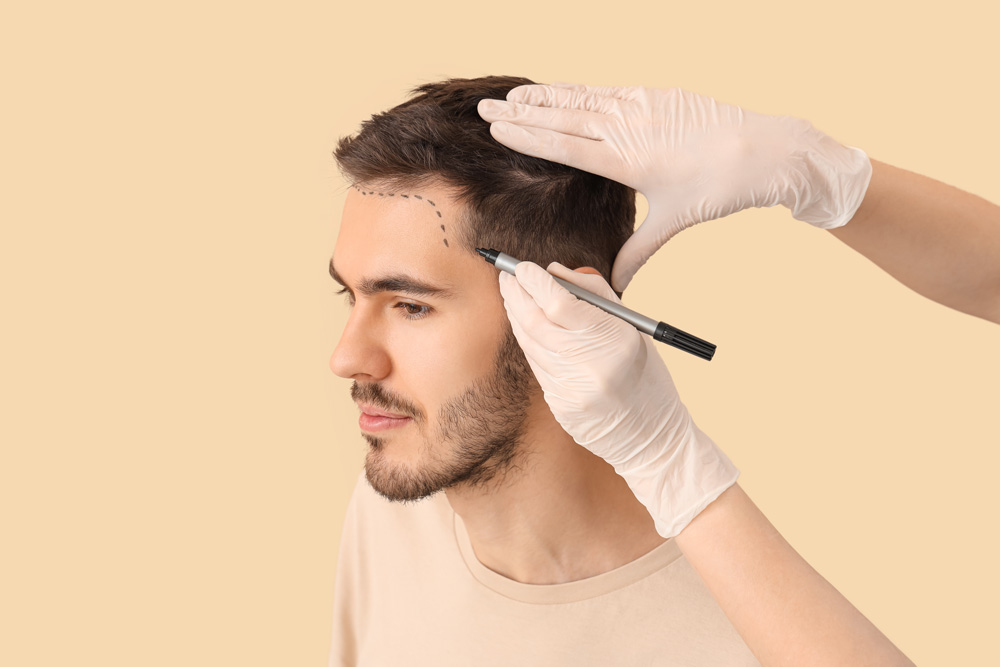
The mid stages involve both hairline recession and crown thinning. Stage three vertex adds crown thinning to the temple recession seen at stage three. This is a common presentation in men in their thirties and forties. Stage four shows more significant loss at both the hairline and crown. A band of hair between the two areas is still present. Stage five shows this connecting band thinning significantly. The hairline has receded further and the crown bald area has expanded. Hair transplantation is the most effective treatment at these stages. Graft requirements increase at each level. Stage three vertex may need one thousand five hundred to two thousand five hundred grafts. Stage five may require three thousand to four thousand. Medical treatment alongside surgery helps stabilise remaining native hair. The mid stages represent the period where surgical intervention delivers the most impactful visual improvement.
Advanced Norwood Scale Stages: Six and Seven
The advanced stages represent extensive hair loss. Stage six shows the hairline and crown bald areas merged into one. Only a horseshoe band of hair remains at the sides and back. Stage seven is the most advanced. The horseshoe band is thinner. The remaining hair sits lower on the scalp. These stages present treatment challenges - donor supply is limited relative to the large bald area. Hair transplantation can improve coverage but cannot restore full density across the entire scalp. Strategic graft placement focuses on the most visible areas. Frontal framing creates the greatest visual impact. Stages six and seven may also suit scalp micropigmentation. SMP creates the illusion of closely shaved hair across the scalp. It can be combined with transplantation for a comprehensive approach. Realistic expectations are essential at advanced stages. Full restoration is not achievable but meaningful improvement is.
Norwood Scale and Treatment Planning
The scale directly informs treatment decisions
- Early stages respond to medical management.
- Mid stages benefit from transplantation alongside medication.
- Advanced stages require strategic surgical planning and potentially SMP.
The scale also helps with timing decisions. Young patients at stage two or three face a dilemma. Starting treatment early preserves hair. But hair loss may progress beyond the initial transplant coverage years later. The surgeon must plan for the patient's likely future scale stage. This means considering donor supply management across a lifetime. A transplant at age twenty-five must account for potential progression to stage five or six by age fifty. Conservative grafting with medical support produces the most sustainable long-term plan. The scale provides the framework for these strategic decisions.
How the Procedure Helps Patients
Understanding the Norwood scale empowers patients to make informed decisions. It removes the vagueness from hair loss discussions. Patients can identify their own stage using photographs and descriptions. This self-assessment helps before even attending a consultation. The scale provides context for treatment recommendations. When a surgeon recommends a specific graft count, the staging explains why. Patients understand what they are treating and what the goal is. The scale also helps manage expectations. A stage six patient understands that full restoration is not possible. A stage three patient understands that early treatment produces the strongest result. Knowledge reduces anxiety and replaces uncertainty with a clear framework for action. The scale has served as the standard classification for over fifty years because of its practical clarity and clinical usefulness.
Norwood Scale Limitations
The Norwood scale is useful but not perfect. It describes a pattern but not every man follows it precisely. Some men experience diffuse thinning rather than the specific pattern the scale describes. Women experience different hair loss patterns entirely. The Ludwig scale is used for female classification instead. The scale doesn’t account for hair quality factors such as thickness, colour and curl. A man with fine, light hair at stage three may appear more bald than a man with thick, dark hair at stage four. The scale also does not predict the speed of progression. Two men at stage three may progress very differently over the next decade. Despite these limitations, the scale remains the most practical and widely accepted tool for assessing and communicating male pattern hair loss severity.
Norwood Scale Assessment in Turkey
Turkish hair transplant clinics use the Norwood scale as a standard assessment tool. Remote consultation begins with scale classification. Patients send photographs from multiple angles. The surgeon identifies the current stage and plans accordingly. The scale guides graft count estimation and surgical planning. Turkish clinics offer treatment at competitive pricing across all stages. All-inclusive packages cover consultation, surgery, accommodation and aftercare. The scale assessment ensures personalised treatment. Patients at different stages receive different surgical plans. Experienced Turkish surgeons treat patients across the full spectrum of the scale daily. This builds the expertise needed for both simple and complex cases. Professional assessment before travel ensures the most appropriate plan for each individual.
Conclusion
The Norwood scale classifies male pattern hair loss into seven stages. It is the global standard for assessing severity and planning treatment. Early stages respond to medical management. Mid stages benefit from hair transplantation with medication. Advanced stages require strategic planning and realistic expectations. The scale helps patients understand their condition and make informed treatment decisions. Professional consultation determines the current stage and the most appropriate intervention. Turkey offers hair transplant treatment across all scale stages at competitive pricing with experienced specialists.
Want to find out more about hair transplant surgery in Turkey, visit the ACIBADEM Beauty Center hair transplant page.
Frequently Asked Questions
Compare your hairline and crown to the stage descriptions. A surgeon confirms the assessment during consultation.
Stage three onwards. Earlier stages often respond to medical treatment alone.
Finasteride and minoxidil can slow or stop progression in many patients.
Full density restoration is not achievable. Meaningful improvement is possible with strategic planning.
No. Female hair loss follows different patterns classified by the Ludwig scale.