Ataşehir Mah. Feza Sk. No:3 İstanbul / Türkiye
 English
Introduction
Jawline fillers vs jawline surgery is one of the most common questions in facial aesthetics consultations. Both approaches improve the definition and shape of the jawline. Their results, risks, recovery and cost differ significantly. Jawline fillers are a non-surgical injectable treatment. They add volume and definition without surgery or downtime. Jawline surgery reshapes the bone and soft tissue permanently. It requires general anaesthesia and a formal recovery period. Understanding the differences between jawline fillers vs jawline surgery helps patients make a well-informed decision. This article covers the jawline fillers vs jawline surgery decision in full detail.
What Can Jawline Fillers Achieve?
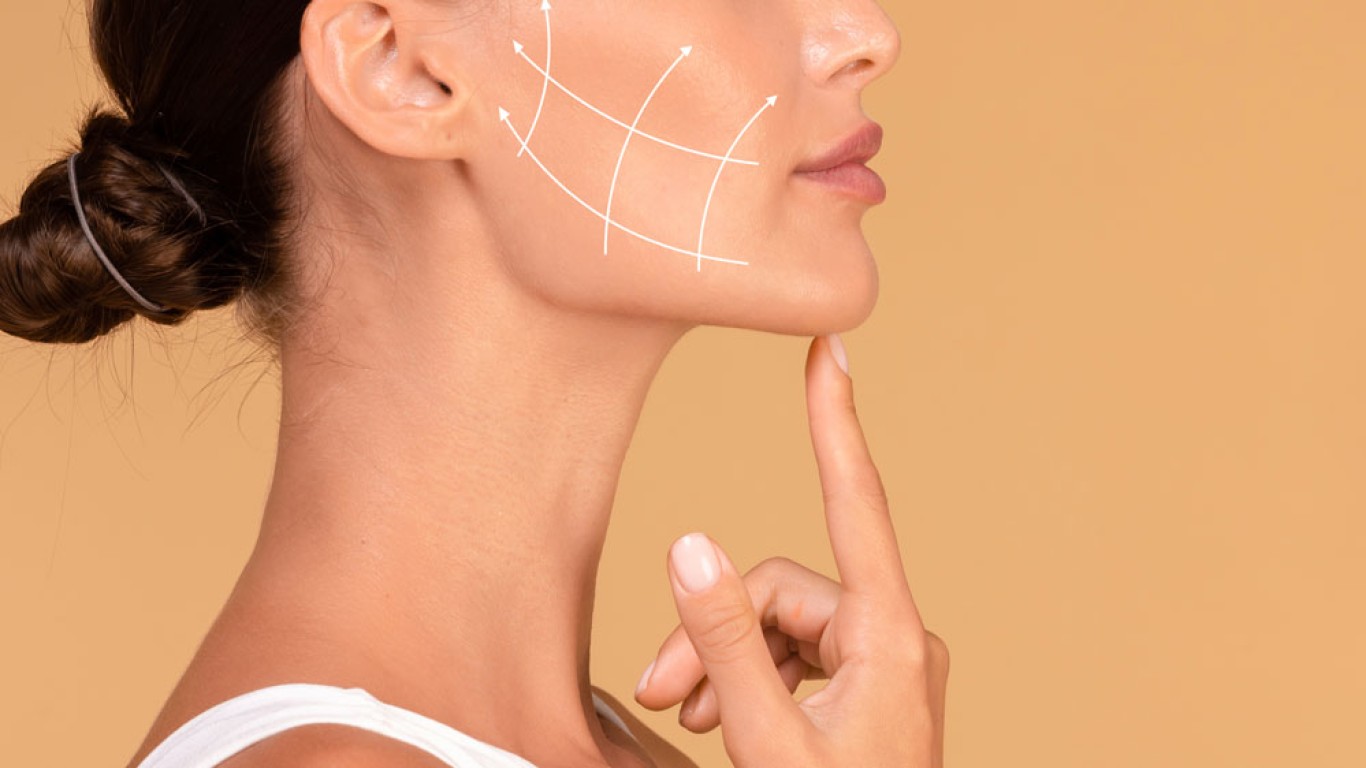
Jawline fillers add volume and definition to the jaw using hyaluronic acid. The filler is injected along the jawline. This creates the appearance of a sharper, more defined jaw angle. The chin can also be augmented with filler. This improves the overall jaw-to-chin projection. Jawline fillers are ideal for mild to moderate concerns. They improve definition in patients with a naturally soft or undefined jawline. They add volume to areas with mild recession. They can correct minor asymmetry. Jawline fillers last twelve to eighteen months. They can be dissolved with hyaluronidase if the result is unsatisfactory.
What Can Jawline Surgery Achieve?
Jawline surgery addresses bone and soft tissue structure. It achieves changes that no amount of filler can replicate. Genioplasty moves or reshapes the chin bone. This creates structural changes in profile and frontal view. Mandibular angle reduction reduces the width of the lower jaw. This creates a slimmer facial shape. Jaw implants add permanent projection to the jaw angle or chin. These are inserted through small intraoral incisions. Jawline surgery results are permanent in structure. They do not require ongoing maintenance. The degree of change achievable with jawline surgery is significantly greater than with fillers.
Jawline Fillers vs Jawline Surgery: Results Compared
The results from jawline fillers vs jawline surgery are not directly comparable. Jawline fillers produce subtle to moderate enhancement. They are ideal for patients who want improvement without surgery. The result looks natural when the correct volume is used. Jawline surgery produces structural change. It is appropriate for patients who want significant correction. Patients with significant jaw recession, facial asymmetry or skeletal imbalance benefit most from surgery. Patients with mild definition concerns benefit most from fillers. A patient consultation determines which category each individual falls into. Honest assessment of the degree of change required guides the decision.

Risk and Safety
The risk profiles of jawline fillers vs jawline surgery are very different. Jawline fillers carry relatively low procedural risk. The main risks are bruising, swelling and vascular occlusion. Vascular occlusion in the jaw area is rare. It requires immediate treatment with hyaluronidase. An experienced practitioner with anatomical knowledge minimises this risk. Jawline surgery carries the risks associated with general anaesthesia and bone surgery. Nerve injury, infection, asymmetry and implant-related complications are possible. These risks are low when surgery is performed by a qualified maxillofacial or craniofacial surgeon. Both approaches are safe when performed correctly.
Jawline Fillers vs Jawline Surgery: Recovery
Recovery from jawline fillers is minimal. Most patients experience bruising and mild swelling. This resolves within five to seven days. Light activities can resume the same day. High-intensity exercise is avoided for forty-eight hours. Most patients return to normal activities immediately. Recovery from jawline surgery is significantly longer. Swelling is substantial in the first two weeks. A liquid diet is required in the immediate post-operative period. Return to light activities takes two to four weeks. Strenuous exercise is avoided for six weeks. The full result from jawline surgery takes three to six months to become fully visible.
Jawline Fillers vs Jawline Surgery: Cost
Jawline fillers are significantly cheaper initially than jawline surgery. A jawline filler treatment in Istanbul can vary considerably in price. Costs depend on filler quantity, product choice and practitioner experience. A full treatment may require several syringes depending on individual anatomy. Comparable London treatment can cost considerably more. Jawline surgery in Istanbul generally involves a much larger initial investment. UK private surgical pricing can also be substantially higher. However, filler requires maintenance because results gradually diminish. Surgery can provide longer-lasting structural changes, although ageing continues afterwards. When comparing jawline fillers vs jawline surgery, patients should consider long-term maintenance costs. Repeat filler costs can accumulate considerably over several years. However, jawline fillers vs jawline surgery should not be compared using price alone. Surgical costs may also include anaesthesia, hospital fees and postoperative care.
Conclusion
Jawline fillers vs jawline surgery involves differences in treatment goals, recovery, longevity and cost. Fillers may suit selected mild or moderate contour concerns. They generally require less recovery but need ongoing maintenance. Hyaluronic acid fillers may be reversible, although treatment still carries recognised risks. Surgery can address significant structural concerns and provide longer-lasting changes. However, it involves surgical risks, anaesthesia and a formal recovery period. Ultimately, jawline fillers vs jawline surgery requires personalised assessment rather than a standard recommendation. Both treatment types are available through providers in Istanbul. Turkish prices can be lower than comparable UK private treatment. Professional consultation helps determine which approach appropriately addresses the patient's anatomy and goals.
For more information about jawline procedures and to book a consultation visit the ACIBADEM Beauty Center Aesthetics page.
Frequently Asked Questions
Neither is universally better. Jawline fillers suit mild to moderate concerns and patients who want reversible, non-surgical improvement. Jawline surgery suits patients with significant structural concerns. A consultation with a qualified practitioner in both approaches provides the most accurate guidance.
Jawline fillers using high-cohesivity hyaluronic acid typically last twelve to eighteen months. Some products last longer in the deep jaw area. Maintenance appointments are needed to sustain the result.
No. Hyaluronic acid jawline filler is temporary. It is gradually metabolised by the body. It can also be dissolved using hyaluronidase. This reversibility is the defining safety advantage of filler over surgery.
For mild to moderate concerns, yes. For significant structural concerns such as jaw recession, asymmetry or skeletal imbalance, fillers cannot replicate surgical results. The degree of change required determines which is appropriate.
Jawline filler in Istanbul costs £100 to £200 per syringe. A full jawline treatment costs £200 to £600. Jawline surgery in Istanbul costs £2,500 to £6,000 all-inclusive depending on the procedure.