Ataşehir Mah. Feza Sk. No:3 İstanbul / Türkiye
 French
  English
  German
  Spanish
Introduction
Astigmatism affects vision clarity by causing light to focus unevenly on the retina. Modern laser eye surgery offers structured correction for this common condition. People wanting sharper focus often explore this option because it provides precise reshaping of the corneal surface. This full guide explains how laser eye surgery treats astigmatism. Including what happens during the procedure, who qualifies, and how results develop over time.
How Astigmatism Affects Vision
Astigmatism occurs when the cornea or lens has an irregular curve. Light entering the eye then scatters rather than focusing sharply. This causes blurred or distorted vision at several distances. The condition varies in intensity, and correction depends on the level of irregularity. Laser eye surgery targets the curved area and reshapes it into a smoother, even surface.
How Laser Eye Surgery Corrects Astigmatism
Laser treatment reshapes the cornea using controlled pulses of light. These pulses remove microscopic layers from targeted zones. The goal is to create a rounder curve. By improving the surface shape, light enters the eye evenly. This helps sharpen focus and reduce distortion. Different types of laser eye surgery use varied approaches. Yet all aim for precise contour refinement.
Main Types of Laser Eye Surgery Used for Astigmatism
Several techniques support astigmatism correction:
- LASIK: LASIK remains the most requested method. Specialists create a thin flap, reshape the cornea beneath it, and then reposition the flap. It suits people wanting quick recovery and refined reshaping.
- PRK: PRK removes the surface layer before reshaping the cornea. The layer then grows back naturally. This method suits people with thinner corneas.
- SMILE: SMILE uses a small incision to remove a thin lens-shaped piece from the cornea. It reshapes the area without creating a flap. This method supports stable results and a streamlined approach.
Each method corrects curvature with controlled precision.
Who Qualifies for Laser Eye Surgery?
Suitability depends on several factors. Specialists examine corneal thickness, prescription stability, overall eye health, and astigmatism level. People with stable vision and healthy corneal structure often qualify. A structured assessment ensures the chosen technique matches individual eye characteristics.
Why Laser Eye Surgery Suits Astigmatism Correction
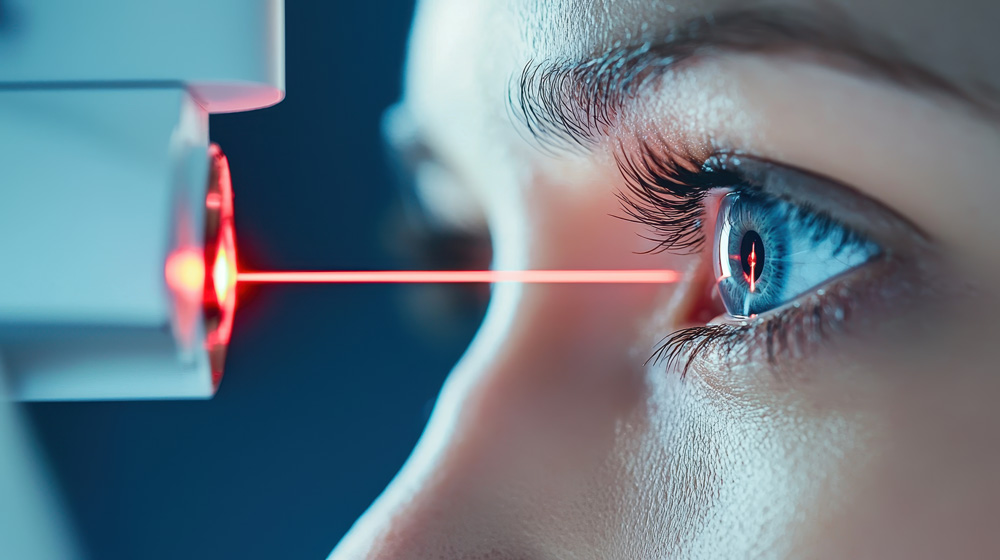
Astigmatism requires smoothing of uneven corneal surfaces. Laser technology provides consistent, measured shaping. Modern platforms track eye movement during treatment. This ensures the laser remains aligned. The reshaped surface then supports clearer focus. Results remain reliable because the treatment targets the exact area causing distortion.
What to Expect During the Procedure
The procedure follows several steps. Numbing drops keep the eyes comfortable. Specialists position the laser system carefully. Controlled pulses reshape the corneal surface according to the planned design. The process usually takes minutes. Once complete, the eye begins healing straightaway.
Immediate Recovery After Laser Eye Surgery
People often notice early changes within hours. Vision improves steadily during the first week. Minor dryness or light sensitivity may occur, although this usually settles as the eye adjusts. Specialists provide guidance to support smooth recovery. Protective measures help maintain comfort during early healing.
How Vision Improves in the Following Weeks
Focus sharpens gradually. The cornea continues to stabilise, revealing clearer detail. Many people reach strong clarity within a month. Astigmatism correction often becomes noticeable early because the reshaped surface redirects light evenly. Consistent habits support comfort throughout this stage.
Why Corneal Stability Matters for Long-Term Results
A stable cornea helps maintain predictable focus. After laser eye surgery, the tissue strengthens during healing. This supports lasting clarity. Because the reshaped pattern reflects natural curvature, the eye handles light more consistently. Regular check-ups confirm that healing matches expectations.
Possible Enhancements and Fine-Tuning
Some people choose minor adjustments later to refine their vision. Enhancements depend on corneal thickness and visual goals. These adjustments fine-tune clarity. Specialists ensure timing aligns with complete healing. People often select enhancements when they want even sharper detail.
Comparing Laser Eye Surgery with Glasses or Contact Lenses
Laser eye surgery provides a fixed structural change rather than an external correction. Glasses and lenses help focus light but do not adjust the cornea itself. Some people prefer surgery because it offers long-lasting alignment. Others choose it for convenience. The key benefit is the controlled reshaping of the irregular curve.
How Modern Scanning Guides Treatment
Eye mapping remains essential for planning. Corneal scans measure thickness, curve, and surface patterns. This helps specialists design treatment zones. Mapping ensures accuracy during surgery. These steps support reliable and well-balanced correction.
Lifestyle Considerations After Treatment
People return to most routines steadily. Hydration supports comfort, and protective eyewear shields the eyes during outdoor activity. Screens may require moderation during early healing. Light, regular habits contribute to continued clarity.
Why People Choose Laser Eye Surgery for Astigmatism
People often choose laser eye surgery for its reliable reshaping abilities. The procedure offers efficient correction and predictable planning. Many appreciate the structural change it provides. The treatment supports long-lasting clarity and a manageable routine.
Understanding Long-Term Stability
Results remain steady when the cornea retains its shape. The reshaped surface behaves predictably, allowing light to focus accurately. Regular reviews confirm stability. Long-term habits, including healthy eye care, support sustained clarity.
Combining Astigmatism Treatment with Other Adjustments
Laser procedures can correct short-sightedness and long-sightedness alongside astigmatism. Specialists design a single plan that addresses all elements. This integrated approach supports balanced and consistent focus.
Conclusion
Laser eye surgery offers structured and effective correction for astigmatism. By smoothing irregular corneal curves, the procedure supports sharper focus and long-term clarity. With detailed planning and refined techniques, laser eye surgery remains a widely chosen option for people wanting dependable, lasting improvement.
For more information and to book a consultation visit the ACIBADEM Beauty Center Laser Eye Surgery webpage.
Frequently Asked Questions
Suitability depends on corneal thickness and prescription level.
LASIK, PRK, and SMILE all correct astigmatism effectively.
Vision usually stabilises within several weeks.
Results remain steady when the cornea stays stable.
Yes, reshaping takes only minutes per eye.