Ataşehir Mah. Feza Sk. No:3 İstanbul / Türkiye
 French
  English
  German
  Spanish
Introduction
Presbyopia treatment has become one of the most sought-after areas of modern ophthalmology. Presbyopia is the age-related loss of near focusing ability. It affects virtually everyone over the age of forty. The condition makes reading, using a smartphone and performing close-up tasks increasingly difficult without glasses. Many adults find reading glasses frustrating and inconvenient. Modern surgical options now offer effective solutions that can reduce or eliminate dependence on reading glasses. Choosing the right option requires a clear understanding of what each procedure involves. Understanding the available options helps patients choose the right approach for their vision needs and lifestyle. This article explains the advanced options available in 2026.
What Is Presbyopia?
Understanding the condition supports informed treatment decisions. Presbyopia occurs when the natural lens inside the eye loses its flexibility with age. In youth, the lens changes shape easily to focus on objects at different distances. This ability is called accommodation. From approximately age forty, the lens stiffens and accommodation reduces. Close objects become blurry. Patients hold reading material further away to focus. Eventually arms become too short and reading glasses become necessary. Presbyopia affects everyone regardless of whether they previously had perfect vision, short-sightedness or long-sightedness. The condition progresses gradually until approximately age sixty-five. By this point accommodation is essentially lost. Addressing this mechanical limitation of the ageing lens is the core aim of presbyopia treatment.
Monovision LASIK for Presbyopia Treatment
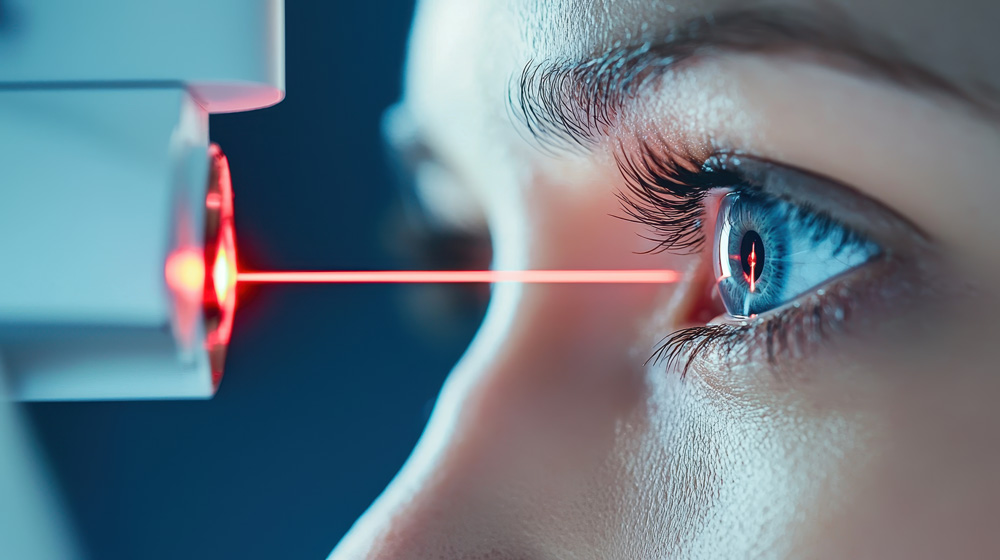
Monovision LASIK is one of the most established surgical approaches. The technique corrects one eye for distance vision and the other for near vision. Brain learns to use the appropriate eye for different tasks. The dominant eye is typically corrected for distance. The non-dominant eye is set for near focus. LASIK reshapes the cornea to achieve the desired focal point in each eye. Most patients adapt to monovision within a few weeks. This approach works well for patients who first trial monovision contact lenses before surgery. Some patients find the difference between the two eyes affects depth perception. Others notice reduced distance clarity. A contact lens trial before committing to laser presbyopia treatment is strongly recommended. Candidates who adapt well to the trial tend to achieve the best surgical outcomes.
Refractive Lens Exchange for Presbyopia Treatment
Refractive lens exchange is among the most comprehensive surgical options available. The procedure replaces the eye's natural stiffened lens with an artificial intraocular lens. These lenses are designed for multiple focal distances. Multifocal IOLs provide clear vision at near, intermediate and distance. Extended depth of focus lenses provide a continuous range of vision. Trifocal IOLs address near, intermediate and far distances simultaneously. The procedure is identical to cataract surgery and takes approximately fifteen minutes per eye. Refractive lens exchange also eliminates the possibility of future cataracts. This makes it particularly attractive for patients in their late forties and fifties. The approach addresses the root cause of presbyopia rather than compensating for it. It is widely considered the most thorough form of presbyopia treatment available today.
Corneal Inlays for Presbyopia Treatment
Corneal inlays represent an innovative surgical option. A tiny device is implanted within the cornea of the non-dominant eye. The inlay modifies how light enters the eye to improve near focus. Different designs achieve this through different mechanisms. Some inlays use a small aperture that increases depth of focus through the pinhole effect. Others reshape the corneal surface to create a multifocal effect. The procedure is minimally invasive and takes approximately ten minutes. Being removable if results are unsatisfactory makes this a reversible form of presbyopia treatment. Recovery is rapid and most patients return to normal activities within days. Corneal inlays suit patients who want reduced reading glass dependence without altering the natural lens. Newer designs continue to improve near vision while maintaining distance clarity.
Multifocal and EDOF Contact Lenses
While not surgical, advanced contact lenses deserve mention alongside other forms of presbyopia treatment. Multifocal contact lenses provide simultaneous near and distance correction. Extended depth of focus designs offer a smoother range of vision. Daily disposable multifocal lenses offer convenience without surgical commitment. These options suit patients who want to reduce reading glass use but are not yet ready for surgery. Contact lenses allow patients to experience multifocal correction before deciding on permanent surgical options. They serve as a useful bridge that maintains quality of life during deliberation. Modern multifocal lens designs have improved significantly. Many presbyopic patients find them a practical and satisfying solution.
Choosing the Right Presbyopia Treatment
Choosing the right approach depends on several factors. Age influences which options are most appropriate. Patients in their early forties with mild presbyopia may prefer monovision LASIK or contact lenses. Those in their late forties to fifties often benefit most from refractive lens exchange. This option corrects presbyopia and prevents future cataracts simultaneously. Existing refractive errors also affect the decision. Lifestyle and visual demands matter because some activities require precise binocular depth perception. Tolerance for optical compromise varies between individuals. The ophthalmologist evaluates all relevant factors during consultation. Each presbyopia treatment plan is personalised to the individual. The ideal solution depends on visual anatomy, prescription and lifestyle requirements.
Results from Presbyopia Treatment
Results from modern options are encouraging. Most patients achieve significant reduction in reading glass dependence. Complete independence from glasses for all distances is difficult to guarantee. Most patients manage the vast majority of daily tasks without glasses. Some may still prefer glasses for prolonged fine reading or low-light conditions. Monovision LASIK achieves good near and distance function for most adapted patients. Refractive lens exchange with premium IOLs provides the broadest range of clear vision. Satisfaction with presbyopia treatment is highest when expectations are realistic before the procedure. Spectacle independence is the goal rather than perfection at every distance. Setting realistic expectations before surgery is an important part of the process.
Presbyopia Treatment Cost
Cost varies across options. Monovision LASIK is priced similarly to standard LASIK at roughly £1,500 to £3,000 per eye in the UK. Refractive lens exchange with premium multifocal IOLs costs £3,000 to £5,000 per eye. Corneal inlay fees vary depending on the specific device used. Turkey offers competitive pricing across all presbyopia treatment options with savings of forty to sixty percent. The investment eliminates the ongoing expense of reading glasses and managing multiple pairs. Most patients consider the improvement in quality of life well worth the cost. Clinic standards and patient outcomes in Turkey are comparable to those in Western Europe. Many patients choose to combine treatment with a short stay, making the trip both practical and cost-effective.
Presbyopia Treatment Safety
Safety profiles across all options are excellent. Monovision LASIK carries the same well-established safety record as standard LASIK. Refractive lens exchange carries risks similar to routine cataract surgery. This is one of the safest procedures in modern medicine. Corneal inlays are reversible, providing an additional safety margin. Night vision disturbances including halos and glare can occur with multifocal presbyopia treatment. These typically improve over time as the visual system adjusts. Newer IOL designs produce fewer optical side effects. Choosing an experienced ophthalmologist who performs high volumes of these procedures ensures the best outcomes. Pre-operative screening identifies patients at higher risk of complications.
Conclusion
Modern presbyopia treatment in 2026 offers multiple effective options for reducing dependence on reading glasses. Monovision LASIK, refractive lens exchange, corneal inlays and advanced contact lenses each suit different patient profiles. Refractive lens exchange provides the most thorough correction by addressing the root cause directly. The right choice depends on age, prescription, lifestyle and individual visual priorities. Results are generally excellent and most patients achieve significant spectacle independence. Turkey offers competitive pricing across all options. A consultation with an experienced ophthalmologist determines which approach best suits each person's vision needs and long-term goals. Taking time to explore all available options ensures the most informed and satisfying decision.
For more information and to book a consultation visit the ACIBADEM Beauty Center Aesthetics page.
Frequently Asked Questions
Age-related loss of near focusing ability affecting virtually everyone over forty.
Yes, monovision LASIK and other laser approaches effectively reduce reading glass dependence.
Refractive lens exchange provides the most comprehensive correction for most patients.
Most patients achieve significant independence though some may use glasses for fine reading.
LASIK: £1,500–£3,000 per eye; lens exchange: £3,000–£5,000 per eye in the UK.