Ataşehir Mah. Feza Sk. No:3 İstanbul / Türkiye
 English
Introduction
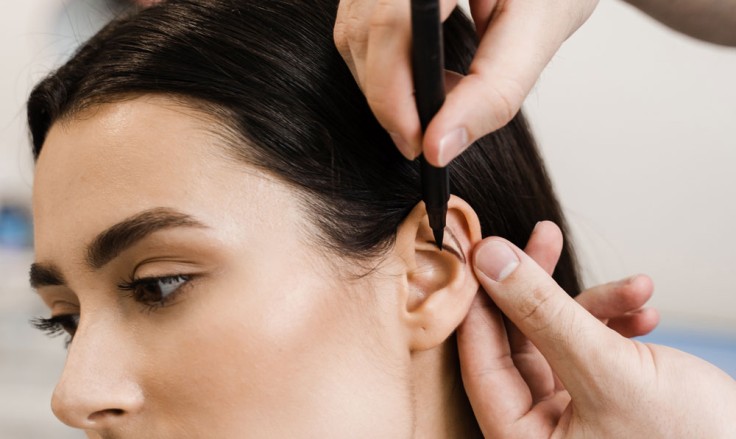
Prominent ears are a common concern for both children and adults. Some people feel self-conscious about ears that stick out noticeably from the side of the head. Ear pinning surgery is designed to reshape the ears and bring them closer to the head. The procedure is also known as otoplasty or pinnaplasty, depending on the technique and country. It is one of the most commonly performed cosmetic procedures on the ears. This guide explains what ear pinning surgery involves and who it suits. It also covers recovery, results and the risks to consider before deciding.
What Is Ear Pinning Surgery?
Ear pinning surgery is a procedure that changes the shape, position or proportion of the ears. Its main aim is to reduce how far the ears stick out from the head. Prominent ears are usually caused by the way the ear cartilage has developed. Some people have an underdeveloped fold in the upper ear. Others have a deep bowl in the central part of the ear, which pushes it outwards. Ear pinning surgery reshapes or repositions this cartilage to create a more natural contour. It does not affect hearing, as the inner structures of the ear are not altered. The procedure can be carried out on one ear or both, depending on the concern.
Who Is a Suitable Candidate for Otoplasty?
Ear pinning surgery may suit people who feel their ears stick out noticeably. It can also help people whose ears are uneven or differently shaped. Suitable candidates usually share the following characteristics:
- The ears have reached their adult size, which usually happens by around age five or six
- They are in good general health without active ear infections
- They have realistic expectations about the result
- For children, the child is able to follow aftercare instructions and wants the change
Adults can have ear pinning surgery at any age, provided they are in good health. The cartilage is usually firmer in adults, but good results are still possible.
Ear Pinning Surgery for Children and Adults
Many ear pinning operations are performed on children and teenagers. Treating prominent ears early can help to avoid teasing or self-consciousness at school. Children are usually treated under general anaesthesia to keep them comfortable and still. Their cartilage is softer, which can make it easier to reshape. Adults often choose ear pinning surgery after living with prominent ears for many years. Adult surgery may be carried out under local anaesthesia with sedation or under general anaesthesia. For very young babies, a non-surgical moulding technique may sometimes be used instead. This is only effective in the first few weeks after birth. For children, it is important that the decision to have surgery is shared with the child. Children who want the change themselves tend to cope better with surgery and recovery. A surgeon will usually talk with both the child and parents during the consultation.
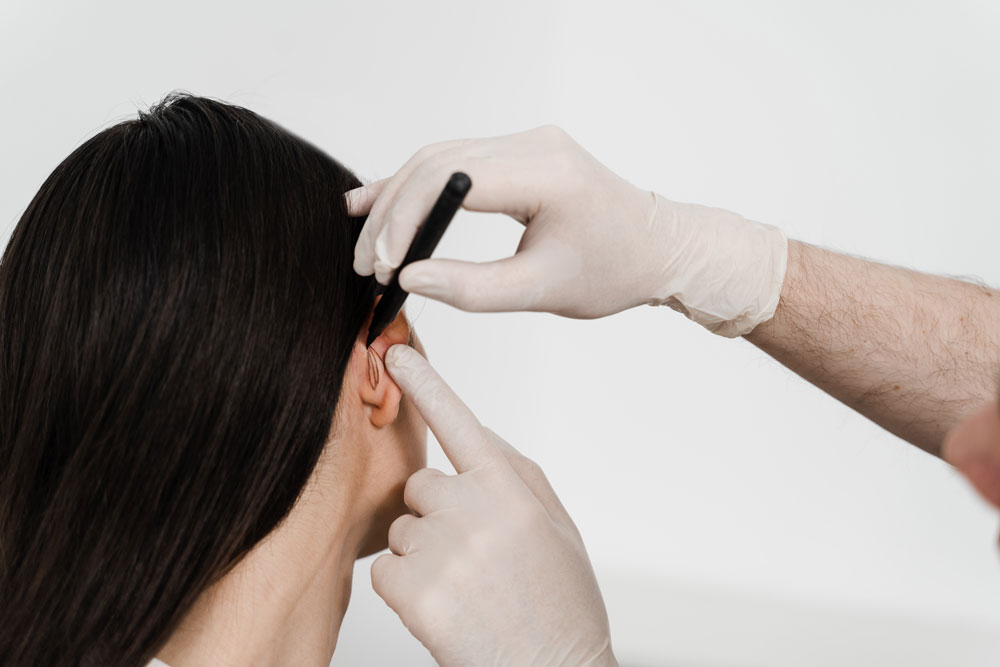
How Ear Pinning Surgery Is Performed
Ear pinning surgery usually takes between one and two hours. The exact time depends on whether one or both ears are treated. Most patients go home on the same day, once they have recovered from the anaesthetic. The surgeon usually makes a small incision in the natural crease behind the ear. This keeps the scar well hidden once it has healed. Through this incision, the surgeon reshapes the cartilage using one or more techniques. Permanent stitches may be used to create a new fold and hold the ear back. In some cases, a small amount of cartilage or skin is removed. The incision is then closed with stitches, and a protective head bandage is applied.
Ear Pinning Surgery Recovery Timeline
Recovery after ear pinning surgery is usually straightforward for both children and adults. Most patients experience some swelling, bruising and tenderness in the first few days.
| Stage | What to Expect |
| Days 1 to 3 | Swelling, tenderness and a feeling of tightness around the ears |
| Around 1 week | Head bandage is usually removed and stitches may be checked |
| Weeks 1 to 2 | Many adults return to work and children often return to school |
| Weeks 2 to 6 | A headband is usually worn at night to protect the ears |
| Around 6 weeks | Contact sports and swimming can often resume with approval |
Pain relief is usually provided to manage discomfort in the first few days. Swelling continues to settle over several weeks, and the final shape becomes clearer over a few months.
Aftercare Tips for a Smooth Recovery
Following aftercare instructions closely helps the ears heal well and protects the result. Your surgeon will provide specific advice based on the techniques used. General advice often includes the following steps:
- Keep the head bandage clean and dry until it is removed
- Wear a soft headband at night to stop the ears folding forward
- Avoid sleeping on the side of the face for the first few weeks
- Avoid contact sports and rough play until your surgeon approves
- Wear loose clothing that does not need to be pulled over the head
Contact your surgeon if you notice increasing pain, swelling, bleeding or a high temperature.
Ear Pinning Surgery Results
The results of ear pinning surgery are visible once the bandage is removed. However, swelling can make the ears look slightly different at first. Most patients are pleased with how their ears look once healing is complete. The ears usually sit closer to the head and appear more balanced with the face. Results are generally considered permanent because the cartilage holds its new shape. However, a small number of patients notice the ears moving slightly outwards over time. Perfect symmetry is not always possible, as most people naturally have slightly different ears.
Conclusion
Ear pinning surgery reshapes the cartilage to bring prominent ears closer to the head. It suits both children and adults and usually takes one to two hours. Recovery is generally straightforward, and results are considered long lasting. A specialist consultation is the best way to find out whether the procedure is right for you.
Explore aesthetic surgery options at ACIBADEM Beauty Center to learn more about otoplasty.
Frequently Asked Questions
Most patients feel discomfort and tightness rather than severe pain. Pain relief is usually provided for the first few days. Discomfort typically improves within one week.
The incision is usually made in the natural crease behind the ear. This keeps the scar well hidden once it has healed. Scars usually fade and become less noticeable over several months.
Ear pinning surgery is usually performed from around age five or six. By this stage, the ears have reached most of their adult size. Adults can have the procedure at any age.
Results from ear pinning surgery are generally considered permanent, as the cartilage usually holds its new shape. A small number of patients notice slight movement later.
Glasses can often be worn once the head bandage has been removed. Your surgeon may advise wearing them carefully to avoid pressure on the ears. Specific advice depends on the surgical technique used.