Ataşehir Mah. Feza Sk. No:3 İstanbul / Türkiye
 English
Introduction
Boxcar acne scars are broad, rectangular depressions with sharply defined edges. They give the skin a pitted, uneven texture. Boxcar acne scars are the second most common type of atrophic acne scarring after ice pick scars. Their wider, shallower shape makes them more responsive to treatment than ice pick scars. Multiple effective options exist. Understanding which treatments work best for boxcar acne scars helps patients choose the right approach for their specific scar pattern. This article examines every effective treatment.
What Are Boxcar Acne Scars?
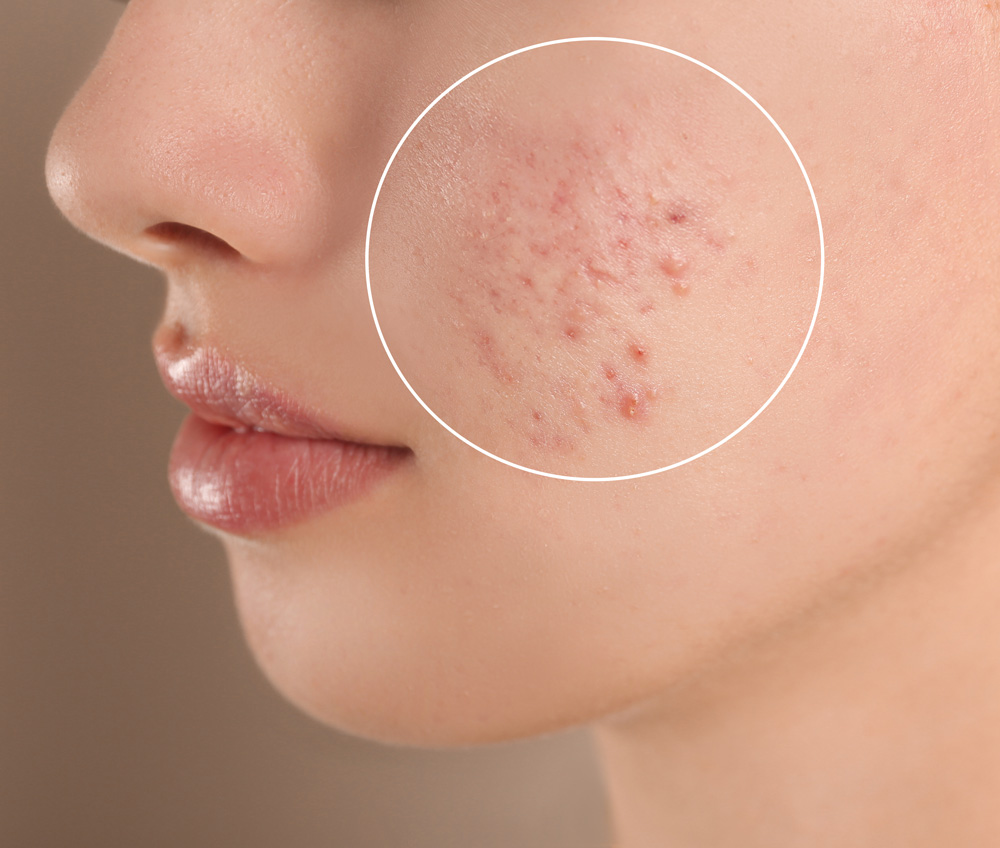
Boxcar acne scars are round or oval depressions with vertical, sharply defined edges. They look like small craters in the skin. The diameter ranges from one to four millimetres. The depth varies from shallow to deep. Crater-like scars result from inflammatory acne that destroys collagen in a localised area. The skin collapses into the void. Unlike ice pick scars which are narrow and deep, boxcar acne scars are wider and have a flat base. This flat base is important. It means the tissue at the bottom of the scar is intact. Treatment can stimulate this tissue to produce new collagen. The scar fills from the base. crater-like scars are classified by depth. Shallow boxcar scars are less than half a millimetre deep. They respond well to surface treatments. Deep boxcar scars extend beyond half a millimetre. They require deeper interventions. Treatment selection depends on the depth.
Best Treatments for Boxcar Acne Scars
| Treatment | How It Works | Best For |
| Fractional CO2 laser | Micro-columns stimulate collagen remodelling | Shallow to moderate boxcar scars |
| RF microneedling | Needles + radiofrequency remodel deep collagen | All depths, all skin tones |
| Subcision | Needle breaks fibrous bands tethering scar down | Tethered, depressed boxcar scars |
| TCA peel (medium depth) | Acid resurfaces the scar base | Shallow boxcar scars |
| Dermal filler | Volume injected beneath scar elevates surface | Immediate improvement, any depth |
| Punch elevation | Scar base cut free and elevated to surface level | Deep, well-defined boxcar scars |
Boxcar acne scars respond to a broader range of treatments than ice pick scars. The wider, more accessible shape allows resurfacing, needling and filler treatments to reach the scar effectively. The most effective treatment plan often combines two or more approaches. Sequential treatment produces cumulative improvement that exceeds any single method.
Boxcar Acne Scars Treatment: Fractional CO2 Laser
Fractional CO2 laser is the most widely used treatment for crater-like scars. The laser creates thousands of microscopic treatment columns in the skin. Each column extends into the dermis. Collagen remodels during healing. The scar base rises. The edges soften. Skin surface becomes smoother. Crater-like scars treated with CO2 laser show twenty to forty percent improvement per session. Three to five sessions spaced six to eight weeks apart produce cumulative results. Shallow boxcar scars respond most dramatically. Deep boxcar scars improve but may need additional treatments alongside laser. Boxcar acne scars CO2 laser recovery involves five to fourteen days of redness and peeling. The skin is pink for two to four weeks. Sun protection is essential during the healing period and afterwards. The recovery is more significant than non-ablative alternatives but the results are proportionately more dramatic.
Boxcar Acne Scars Treatment: RF Microneedling
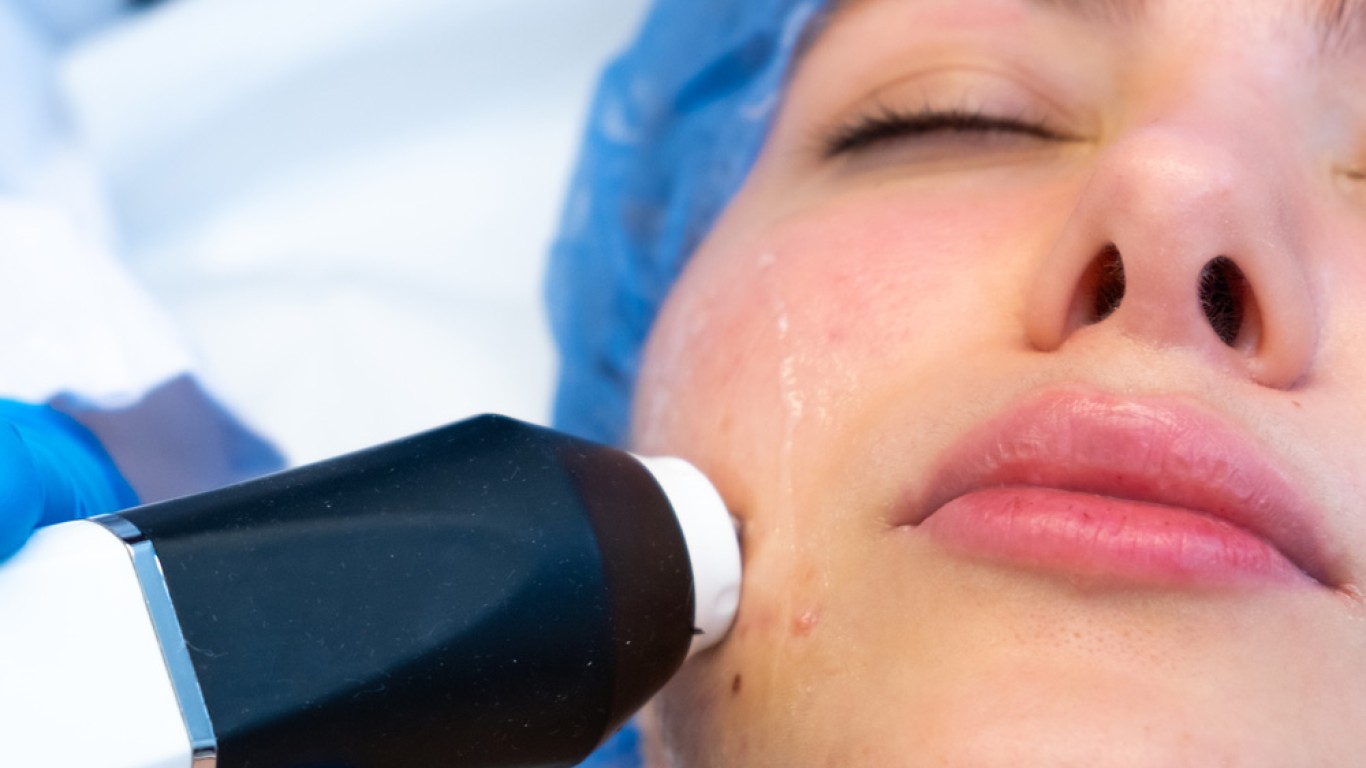
RF microneedling combines physical needling with radiofrequency energy. The needles create channels into the dermis. Radiofrequency energy heats the tissue around each channel. Collagen production is stimulated at controlled depth. Boxcar acne scars treated with RF microneedling show progressive improvement over three to six sessions. The advantage of RF microneedling for crater-like scars is its safety across all skin tones. Unlike CO2 laser, which carries pigmentation risk in darker skin, RF microneedling can be used safely on Fitzpatrick types one through six. This makes it the preferred option for patients with darker skin. Boxcar acne scars RF microneedling recovery is shorter than CO2 laser. One to three days of redness and mild swelling. Social downtime is minimal. The trade-off is slightly less dramatic per-session improvement than ablative laser. More sessions may be needed for equivalent results.
Boxcar Acne Scars Treatment: Subcision
Subcision addresses a specific component of boxcar scarring. Some crater-like scars are tethered. Fibrous bands pull the scar base down, anchoring it to deeper tissue. The scar cannot rise even when collagen is stimulated because the tethering holds it in place. Subcision uses a needle inserted beneath the scar to cut these fibrous bands. The scar base is released. It can now rise toward the surface. Boxcar acne scars treated with subcision may show immediate improvement as the released tissue elevates. Further improvement develops over weeks as new collagen fills the space created beneath the scar. Boxcar acne scars subcision is frequently combined with filler or RF microneedling. Subcision releases the tether. Filler provides immediate volume. Microneedling stimulates ongoing collagen production. The three-treatment combination addresses every component of the scar.
Boxcar Acne Scars Treatment: Chemical Peels
Medium-depth chemical peels resurface crater-like scars. TCA peels at twenty to thirty-five percent concentration produce controlled exfoliation that reaches the scar depth. The damaged tissue peels away. New collagen-rich tissue forms during healing. Boxcar scars treated with medium-depth peels show fifteen to thirty percent improvement per session. Two to four sessions spaced four to six weeks apart produce meaningful cumulative improvement. Shallow boxcar scars respond best to peels. Crater-like scars chemical peel treatment is most appropriate as a component of a combination approach rather than a standalone treatment for moderate to deep scars. Peels improve surface texture and blend the scar edges. Deeper interventions address the scar base. The combination produces more complete improvement than peels alone.
Boxcar Acne Scars Treatment: Dermal Filler
Filler provides immediate correction. Crater-like scars treated with hyaluronic acid filler show instant improvement. A small amount of product placed beneath the scar elevates the depressed base to match the surrounding skin. The surface becomes smooth. Boxcar acne scars filler results are temporary. The product lasts twelve to eighteen months. Repeat treatment maintains the improvement. Filler does not stimulate permanent collagen remodelling. It provides volume that masks the scar rather than healing it. Crater-like scars filler is most useful as part of a combination approach. Filler provides immediate visual improvement while laser or microneedling treatments produce gradual, permanent collagen remodelling. The patient enjoys improved appearance throughout the treatment course rather than waiting months for collagen-based improvement alone.
Conclusion
Boxcar scars may respond to several established treatment approaches. Fractional CO2 laser and RF microneedling can stimulate collagen remodelling. Subcision releases selected tethered scars. Filler can provide improvement in suitable depressed areas. Chemical peels may improve superficial texture in appropriately selected patients. Combination approaches can address different scar characteristics. However, treatment selection depends on scar depth, skin tone and individual healing characteristics. Results usually develop gradually, particularly following treatments that stimulate collagen production. Multiple sessions may be necessary before meaningful improvement becomes visible. Professional assessment supports appropriate treatment planning and realistic expectations. Turkey offers various boxcar scar treatments through specialist providers at potentially competitive prices.
For more information about acne scars and to book a consultation visit the ACIBADEM Beauty Center Skin Treatments page.
Frequently Asked Questions
Combination of subcision, filler and laser or RF microneedling produces the best results.
Three to six sessions depending on depth. Combination protocols span six to twelve months.
Significant improvement is achievable. Eighty to ninety percent improvement is possible with combination treatment.
Yes. RF microneedling is safest across all skin tones. Laser requires careful settings in darker skin.
No. Filler lasts twelve to eighteen months. Permanent improvement requires collagen-stimulating treatments.