Ataşehir Mah. Feza Sk. No:3 İstanbul / Türkiye
 English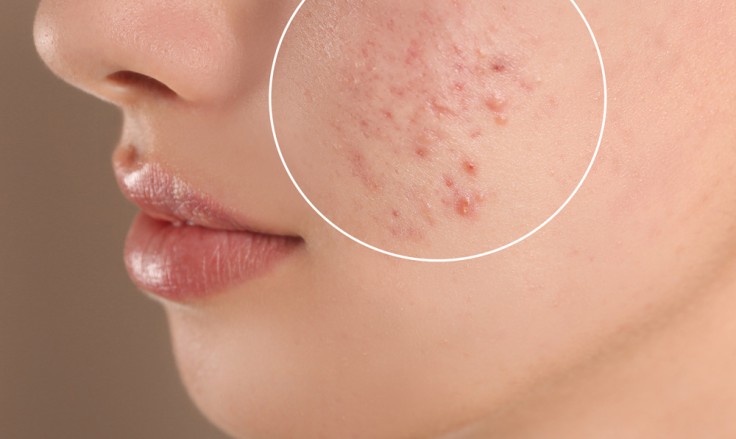
Introduction
Ice pick scars are the deepest and most challenging type of acne scarring. They appear as narrow, sharp depressions in the skin. The scars extend deep into the dermis. Their depth makes them resistant to surface-level treatments. Pitted acne scars require targeted approaches that address the full depth of the scar. Understanding which treatments work best for ice pick scars helps patients invest in effective solutions rather than wasting time and money on approaches that cannot reach the scar depth. This article examines every effective treatment for ice pick scars.
What Are Ice Pick Scars?
Pitted acne scars are narrow, deep, V-shaped depressions in the skin. They look as if the skin was punctured with a sharp instrument. Pitted acne scars extend below the surface into the deep dermis or even subcutaneous tissue. Their diameter is typically less than two millimetres. Their depth can be several millimetres. Pitted acne scars result from severe inflammatory acne. Deep cystic lesions destroy collagen during the healing process. The skin collapses into the void left by the destroyed tissue. The narrow shape forms as the scar contracts during healing. Pitted acne scars are the most difficult acne scar type to treat because of their depth relative to their width. Surface resurfacing alone cannot reach the base of the scar. Treatments must address the full depth to produce meaningful improvement.
Best Treatments for Ice Pick Scars
| Treatment | How It Works | Sessions Needed |
| TCA CROSS | Concentrated acid applied inside individual scars | Three to six |
| Punch excision | Individual scar removed and sutured closed | One |
| Fractional CO2 laser | Micro-columns of heat stimulate collagen remodelling | Three to five |
| RF microneedling | Needles + radiofrequency stimulate deep collagen | Three to six |
| Dermal filler | Hyaluronic acid injected beneath individual scars | Repeat every twelve to eighteen months |
Ice pick scars respond best to targeted, depth-reaching treatments. The most effective approach often combines two or more methods. TCA CROSS addresses individual scars precisely. Laser resurfacing improves the surrounding skin. The combination produces superior results to either treatment alone.
Ice Pick Scars Treatment: TCA CROSS
TCA CROSS is the gold standard for ice pick scars. The technique applies a high concentration of trichloroacetic acid directly into individual scars using a fine applicator. The acid creates controlled chemical destruction at the base of the scar. New collagen forms during healing. The scar fills from the bottom upward. Pitted acne scars treated with TCA CROSS improve by approximately twenty to thirty percent per session. Three to six sessions spaced four to six weeks apart produce cumulative improvement. The scar becomes shallower with each treatment. Pitted acne scars rarely disappear completely.
TCA CROSS significantly reduces their depth and visibility. The treatment is precise. Only the scar tissue is treated. The surrounding skin is unaffected. Downtime involves small scabs at each treated scar that resolve within five to seven days. Pitted acne scars treatment with TCA CROSS is the most cost-effective and evidence-supported approach for this specific scar type. Most dermatologists consider it the first-line treatment.

Ice Pick Scars Treatment: Punch Excision
Punch excision surgically removes individual ice pick scars. A small circular punch tool cuts around the scar. The entire scar column is removed. The wound is sutured closed or left to heal by secondary intention. Pitted acne scars treated with punch excision are replaced by a fine line scar. The line scar sits at the skin surface rather than plunging deep into the dermis. The visual improvement is significant. A flat surface scar is far less noticeable than a deep pit.
Pitted acne scars punch excision suits the deepest, most resistant scars. Those that do not respond adequately to TCA CROSS may be candidates for excision. The procedure is performed under local anaesthesia. Recovery is straightforward. The small sutures are removed at five to seven days. Pitted acne scars punch excision is typically used for selected individual scars rather than treating dozens of scars across the face. It is most effective when combined with laser resurfacing to blend the excision sites with the surrounding skin.
Ice Pick Scars Treatment: Fractional CO2 Laser
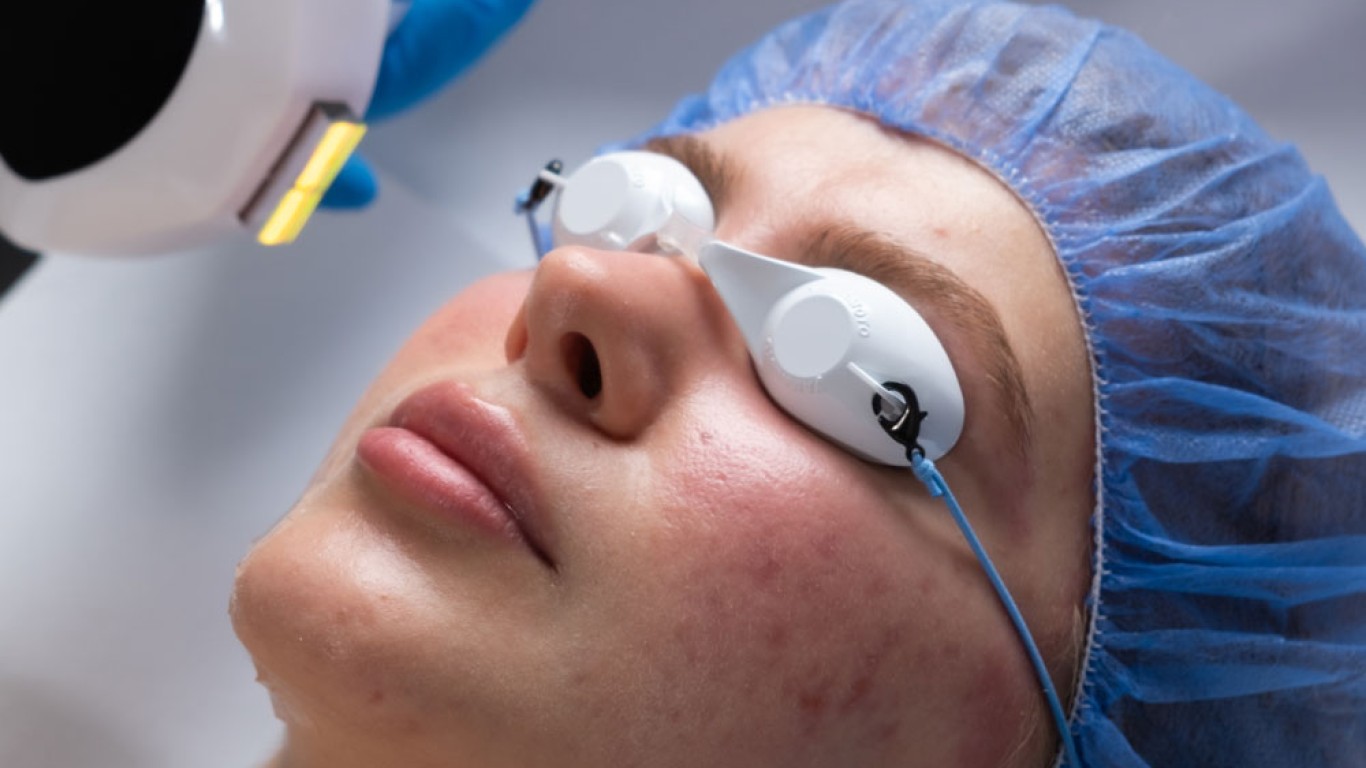
Fractional CO2 laser resurfacing improves the surrounding skin and partially addresses ice pick scars. The laser creates thousands of microscopic treatment columns. Each column extends into the dermis. Collagen remodels during healing. The skin tightens and smooths. Ice pick scars treated with CO2 laser show moderate improvement. The laser reaches partway into the scar depth. Complete resolution of deep ice pick scars with laser alone is uncommon. However, laser significantly improves the overall skin texture around the scars. The combined visual effect is meaningful improvement.
Pitted acne scars treatment combining TCA CROSS with subsequent CO2 laser produces the most comprehensive results. TCA CROSS addresses individual scar depth. Laser refines the overall surface. The two-phase approach produces superior outcomes to either treatment used independently. Ice pick scars laser treatment requires three to five sessions for optimal results. Recovery involves five to fourteen days of redness and peeling per session. Sun protection is essential throughout the treatment course and afterwards.
Ice Pick Scars Treatment: RF Microneedling
Radiofrequency microneedling combines physical needling with thermal energy. The needles penetrate into the dermis. Radiofrequency energy heats the deep tissue. Collagen production is stimulated at depth. Pitted acne scars treated with RF microneedling show progressive improvement over three to six sessions. The depth of needle penetration can be adjusted to match the scar depth. Deeper settings address deeper scars. Pitted acne scars RF microneedling produces less dramatic per-session improvement than TCA CROSS for individual deep scars. However, it improves overall skin quality, texture and tone alongside scar treatment. The dual benefit makes it an effective component of a comprehensive treatment plan. Pitted acne scars RF microneedling suits patients wanting broader skin quality improvement alongside targeted scar treatment. The treatment addresses fine lines, pore size and general texture in addition to scarring. Recovery involves one to three days of redness and mild swelling.
Conclusion
Pitted acne scars are the deepest and most challenging acne scar type. TCA CROSS is the gold standard first-line treatment. Punch excision addresses the most resistant individual scars. CO2 laser and RF microneedling improve overall skin quality. Combination approaches produce the best outcomes. Filler provides immediate temporary improvement. Treatment requires an experienced dermatologist and realistic expectations. Significant improvement is achievable. Complete elimination is uncommon. Turkey offers all treatments at competitive pricing.
For more information about acne and to book a consultation visit the ACIBADEM Beauty Center Skin Treatments page.
Frequently Asked Questions
TCA CROSS is the first-line treatment. Combination with laser produces the best overall results.
Three to six TCA CROSS sessions. Three to five laser sessions. Protocols span six to twelve months.
Significant improvement is achievable. Complete elimination is uncommon due to the scar depth.
Partially. Laser improves surrounding skin and partially addresses scar depth. Best combined with TCA CROSS.
No. Filler lasts twelve to eighteen months. It provides immediate but temporary improvement.