Ataşehir Mah. Feza Sk. No:3 İstanbul / Türkiye
 English
Introduction
Glaucoma treatment in 2026 covers a wider range of options than ever before. Advances in laser technology, surgical technique and pharmaceutical development have expanded the toolkit available to ophthalmologists. Glaucoma is a group of eye conditions that damage the optic nerve. Raised intraocular pressure is the most important modifiable risk factor. Treatment aims to reduce this pressure. It cannot restore vision already lost. It can prevent further loss. This article covers the main treatment options available in 2026 for glaucoma. It explains what each involves and who it is most appropriate for.
Why Glaucoma Treatment Is Urgent
This condition is called the silent thief of sight. Vision loss from glaucoma begins at the periphery. It progresses slowly and is often unnoticed until significant damage has occurred. By the time central vision is affected, substantial optic nerve damage has already happened. Early detection and early glaucoma treatment are the most important factors in preserving vision. Patients diagnosed with glaucoma should begin treatment without delay. Regular monitoring ensures that treatment is working. Any progression detected at monitoring should prompt a review of the current treatment plan.
Glaucoma Treatment: Eye Drops
Eye drops remain the most widely used first-line treatment. Several classes of drops are available. Prostaglandin analogues such as latanoprost are the most commonly prescribed. They increase outflow of aqueous humour from the eye. Beta-blockers such as timolol reduce production of aqueous humour. Alpha-agonists such as brimonidine also reduce production. Carbonic anhydrase inhibitors reduce aqueous production through a different mechanism. Fixed-dose combination drops combine two agents in a single bottle. These improve compliance. Compliance with drop instillation is the most common challenge in glaucoma treatment with drops. Missing doses allows pressure to rise and optic nerve damage to progress.
Glaucoma Treatment: Selective Laser Trabeculoplasty
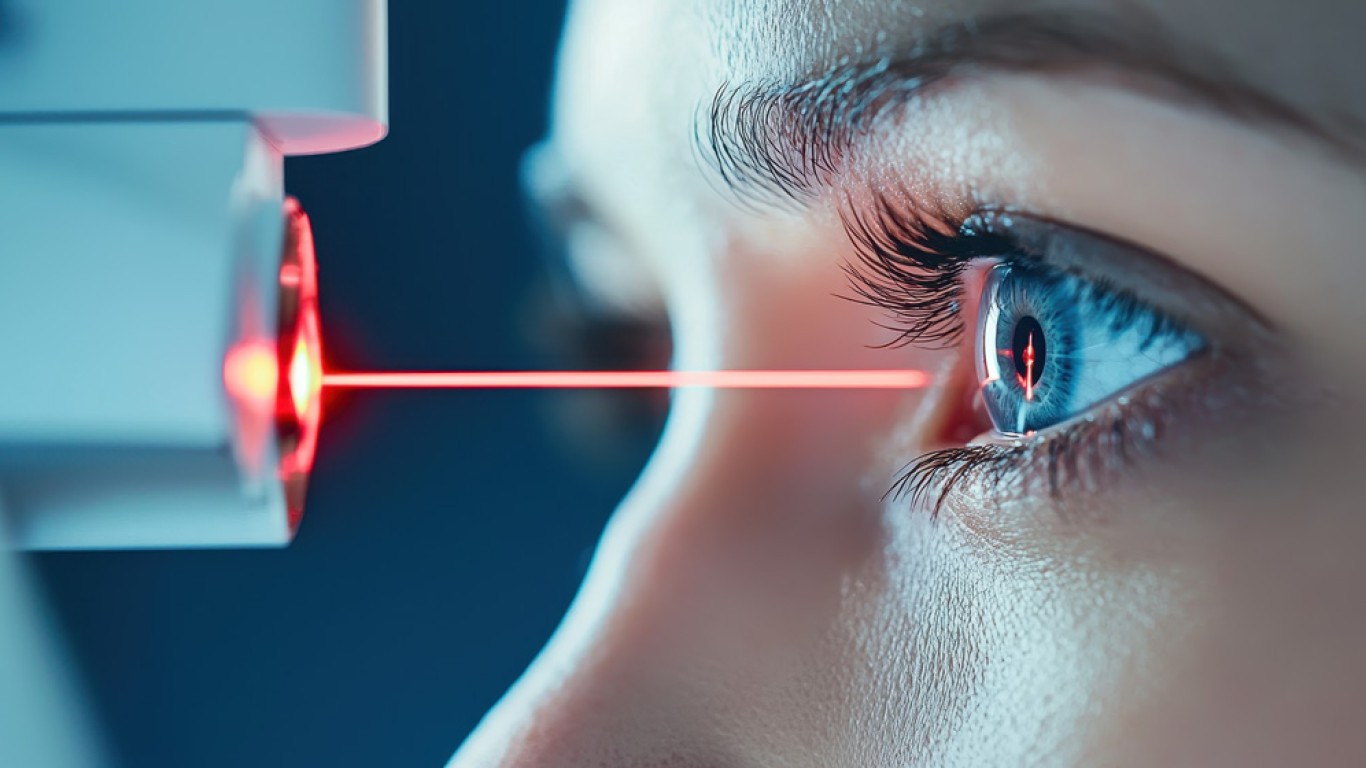
Selective laser trabeculoplasty, known as SLT, is an established and effective glaucoma treatment. It uses a low-energy laser to stimulate the trabecular meshwork. This is the eye's drainage tissue. SLT improves drainage of aqueous humour. Intraocular pressure reduces as a result. The LIGHT trial published in 2019 showed SLT was as effective as drops for primary open-angle glaucoma. It has now become a first-line option in many clinical guidelines. SLT takes five to ten minutes as an outpatient procedure. It produces no external scarring. It can be repeated when the effect diminishes over two to five years.

Glaucoma Treatment: Laser Peripheral Iridotomy
Laser peripheral iridotomy is used in the treatment for narrow-angle and angle-closure glaucoma. A small hole is created in the peripheral iris. This allows aqueous humour to bypass a blocked pathway. Pressure equalises between the anterior and posterior chambers of the eye. The procedure takes under ten minutes. Mild inflammation and blurring are expected for one to two days. Laser peripheral iridotomy is highly effective as both a treatment and a prophylactic measure. It prevents acute angle-closure attacks in patients with narrow angles. This is one of the most impactful preventive procedures in glaucoma management.
Glaucoma Treatment: Minimally Invasive Glaucoma Surgery
Minimally invasive glaucoma surgery, known as MIGS, is one of the most significant developments in glaucoma treatment in recent years. MIGS procedures use microscale devices and techniques to reduce intraocular pressure. They are performed through very small incisions. Recovery is faster than traditional glaucoma surgery. Risks are lower than with trabeculectomy. MIGS devices include the iStent, Hydrus microstent and Kahook Dual Blade. These procedures are most commonly performed alongside cataract surgery. They offer an opportunity to reduce glaucoma pressure at the same time as addressing the cataract. MIGS has become an important part of the management landscape in 2026.
Glaucoma Treatment: Trabeculectomy
Trabeculectomy is the most established surgical treatment for glaucoma. It creates a new drainage channel for aqueous humour. A small flap is created in the sclera. Fluid drains through this flap into a reservoir beneath the conjunctiva. This is called a bleb. The pressure reduction from trabeculectomy is significant. It is used when drops and laser have not controlled pressure adequately. Trabeculectomy requires a hospital stay and careful post-operative management. The bleb must be monitored and managed in the weeks after surgery. Antimetabolite medications such as mitomycin C are often used to improve bleb survival. Trabeculectomy remains an important surgical option for advanced cases.
Conclusion
Glaucoma treatment in 2026 ranges from eye drops and SLT to surgical procedures. The appropriate treatment depends on glaucoma type, pressure and optic nerve damage. Previous treatments, disease progression and individual pressure targets also influence clinical decision-making. Early diagnosis and appropriate treatment can reduce the risk of further vision loss. Following prescribed treatment and monitoring schedules remains essential. Turkey offers numerous treatment options through specialist ophthalmology providers. Treatment costs can sometimes be lower than UK private healthcare. However, cost should be considered alongside surgeon expertise, facilities and long-term follow-up arrangements. Professional ophthalmological consultation is an essential first step. Regular monitoring and review remain important throughout lifelong glaucoma management.
For more information about eye treatments and to book a consultation visit the ACIBADEM Beauty Center Laser Eye Surgery page.
Frequently Asked Questions
The most effective treatment is the one that achieves adequate pressure control for each individual patient. SLT is now a first-line option for open-angle glaucoma. Eye drops remain widely used. Surgery is reserved for cases where drops and laser are insufficient.
Glaucoma cannot currently be cured. Glaucoma treatment manages intraocular pressure to prevent further optic nerve damage. It does not restore vision already lost. Early treatment and consistent monitoring preserve as much vision as possible.
Review is typically needed every three to six months. Visual field testing and optic nerve assessment are performed at each appointment. Any progression detected should prompt a review of the current treatment plan.
MIGS stands for minimally invasive glaucoma surgery. These procedures are used in glaucoma management. It covers a range of procedures using microscale devices to improve drainage. MIGS is typically performed alongside cataract surgery. It carries lower risks and faster recovery than traditional glaucoma surgery.
SLT in Istanbul typically costs £200 to £600. Trabeculectomy costs £2,000 to £5,000 at accredited Istanbul hospitals. UK private hospital pricing for equivalent procedures is significantly higher. All costs should be confirmed in writing before travelling.