Ataşehir Mah. Feza Sk. No:3 İstanbul / Türkiye
 French
  English
  German
  Spanish
Introduction
Patients seeking under-eye rejuvenation face a key decision between non-surgical and surgical approaches. Tear trough filler vs surgery is one of the most common comparisons in facial aesthetic consultations. Both address under-eye hollows, dark circles and tired-looking eyes but through fundamentally different mechanisms and with very different longevity. Tear trough filler offers a non-surgical approach with immediate results but temporary duration. Lower blepharoplasty provides permanent surgical correction. Understanding the filler vs surgery comparison helps patients choose the approach that best matches their concerns, budget and long-term goals.
Understanding the Tear Trough Filler vs Surgery Decision
The tear trough filler vs surgery decision depends on the specific under-eye concern. Not all under-eye issues respond to both approaches equally. Hollowing and volume loss beneath the eyes responds well to filler. Protruding fat pads causing bags require surgical intervention. Excess skin and crepiness need surgery to remove the lax tissue. Some patients have a combination of concerns. The filler vs surgery assessment requires careful evaluation of the individual anatomy. What appears to be a simple dark circle may have different underlying causes. A practitioner experienced in both approaches can advise honestly on which option will produce the best result for each patient’s specific concern.
How Tear Trough Filler Works
Tear trough filler uses hyaluronic acid injected beneath the under-eye skin to fill the hollow groove between the lower eyelid and cheek. The product adds gentle volume that smooths the depression and reduces the shadow causing the dark circle appearance. The treatment takes fifteen to thirty minutes. Results are immediate. Mild swelling resolves within a few days. The tear trough filler vs surgery comparison begins with this non-surgical simplicity. No incisions, no anaesthesia beyond topical numbing and no recovery period make filler an accessible first option. However, the results are temporary. Most patients need repeat treatment every six to twelve months. The ongoing commitment and cumulative cost are important factors in the tear trough filler vs surgery evaluation.
How Under-Eye Surgery Works
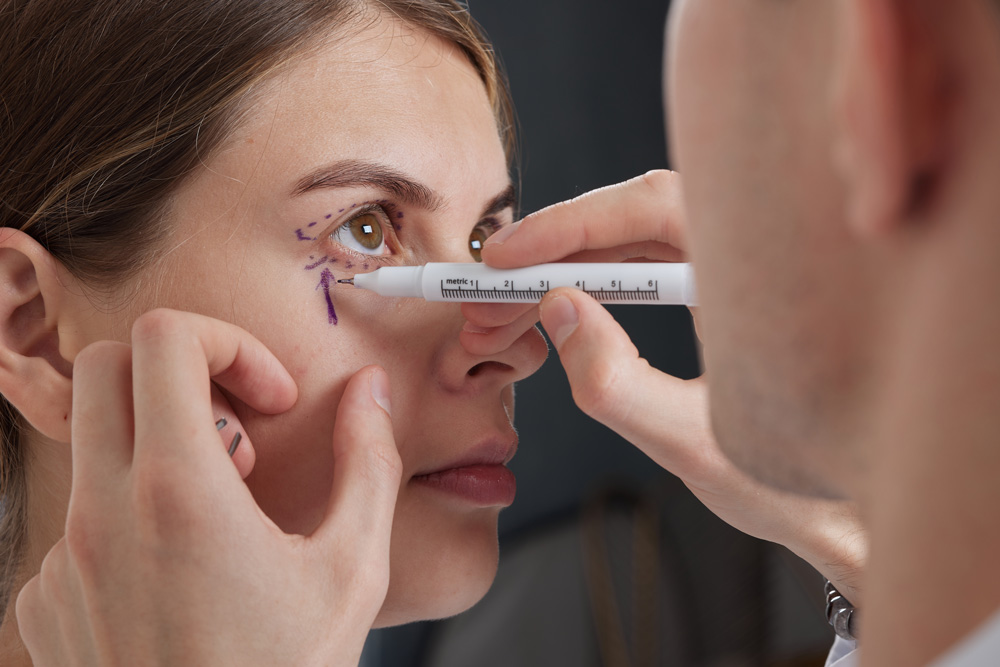
Lower blepharoplasty surgically rejuvenates the under-eye area through tissue removal or repositioning. The surgeon may remove or reposition protruding fat pads that cause bags. Excess skin is trimmed. The incision is placed along the lower lash line or inside the lower eyelid. Procedure takes one to two hours under local anaesthesia with sedation or general anaesthesia. The tear trough filler vs surgery comparison highlights that surgery addresses structural causes that filler cannot. Fat pad repositioning fills the tear trough hollow using the patient’s own tissue while simultaneously eliminating the bag above. This dual correction is not achievable with filler alone. Recovery takes one to two weeks with bruising and swelling during the initial phase.
Tear Trough Filler vs Surgery: Longevity
Longevity is the central question in the tear trough filler vs surgery comparison. Tear trough filler results typically last six to twelve months. Some patients find the under-eye area retains filler slightly longer than other facial zones due to reduced movement. However, repeat treatments are needed to maintain the improvement indefinitely. Lower blepharoplasty results are permanent in most cases. The removed or repositioned fat and excised skin do not return. The eyes continue to age naturally but from a dramatically improved starting point. Many blepharoplasty results last ten years or longer before patients consider further treatment. The filler vs surgery longevity comparison strongly favours surgery for patients seeking permanent correction.
Tear Trough Filler vs Surgery: Cost Over Time
Cost analysis over time is important in the tear trough filler vs surgery comparison. A single tear trough filler session costs two hundred to five hundred pounds. Two sessions per year totals four hundred to one thousand pounds annually. Over five years the cumulative cost reaches two thousand to five thousand pounds. Over ten years it reaches four thousand to ten thousand pounds. Lower blepharoplasty costs three thousand to six thousand pounds in the UK. Turkish pricing ranges from one thousand five hundred to three thousand pounds. The surgical one-time cost is often comparable to five to seven years of filler treatments. The tear trough filler vs surgery cost comparison shows that surgery becomes more cost effective over the longer term for patients committed to maintaining their under-eye improvement.
Tear Trough Filler vs Surgery: Recovery Comparison
Recovery differs significantly in the tear trough filler vs surgery comparison. Tear trough filler requires no downtime. Patients return to normal activities immediately. Mild bruising is the only visible effect. Blepharoplasty requires one to two weeks of recovery. Swelling and bruising around the eyes are significant during the first week. Most patients avoid social activities for seven to ten days. Cold compresses and head elevation support healing. The significantly shorter recovery with filler appeals to patients who cannot take time off work or social commitments. The filler vs surgery recovery comparison often drives the initial choice toward filler even when surgery might produce better long-term results. Some patients start with filler and progress to surgery when ready for the recovery commitment.
Tear Trough Filler vs Surgery: Treatment Considerations
Treatment considerations differ between the two approaches in the tear trough filler vs surgery comparison. Tear trough filler offers a quick non-surgical solution with minimal downtime and immediate improvement. Modern hyaluronic acid fillers are designed for smooth, natural-looking under-eye correction. Surgery provides a more comprehensive and permanent solution for patients with excess skin or prominent under-eye bags. Both approaches require detailed anatomical knowledge and refined technique for optimal results. Experienced practitioners carefully tailor treatment plans to each patient’s facial structure and aesthetic goals. The filler vs surgery comparison highlights that both options can deliver excellent rejuvenation when appropriately selected. Thorough consultation and personalised planning support natural, balanced and satisfying long-term outcomes.
Who Suits Filler and Who Suits Surgery?
The tear trough filler vs surgery decision depends on individual anatomy and concerns. Filler suits patients with primarily hollow tear troughs without significant skin excess or protruding fat pads. Younger patients with early volume loss often achieve excellent results. Filler also suits patients wanting to preview improvement before committing to surgery. Surgery suits patients with under-eye bags caused by fat protrusion. Those with significant skin excess need surgical removal. Patients with combined concerns benefit from the comprehensive correction surgery provides. Those seeking permanent results without ongoing maintenance prefer surgery. The consultation should honestly assess which approach addresses the individual’s specific anatomy most effectively. Age, skin quality and long-term goals also influence the most appropriate treatment recommendation.
Can Both Approaches Be Combined?
Some patients benefit from combining both approaches at different times. Filler can be used as an initial non-surgical trial to assess the potential improvement. If the patient appreciates the result, they may proceed to surgery for a permanent solution. After blepharoplasty, some patients use filler to fine-tune specific areas. The combination of surgical fat repositioning with small amounts of filler for residual hollowing produces comprehensive results. Filler vs surgery comparison does not require an absolute choice between the two. The approaches can work together within a long-term treatment plan. Professional consultation identifies the most effective sequence for individual patients seeking the best possible under-eye rejuvenation. This flexible approach allows treatment plans to evolve alongside changing aesthetic preferences and ageing concerns.
Conclusion
The tear trough filler vs surgery comparison reveals two effective approaches with different strengths. Filler offers immediate results with no downtime but requires ongoing treatment every six to twelve months. Surgery provides permanent correction with one to two weeks of recovery. Cost analysis over time often favours surgery for long-term maintenance. Each approach suits different under-eye concerns and patient profiles. The decision depends on individual anatomy, desired longevity, recovery tolerance and budget. Both approaches produce excellent results when matched appropriately to the patient. Professional consultation ensures the most effective choice in the tear trough filler vs surgery decision for each individual seeking refreshed and rejuvenated under-eye appearance. Careful assessment and realistic expectations support the most satisfying long-term aesthetic outcomes.
To find out more about tear trough filler vs under-eye surgery and to book a consultation visit the ACIBADEM Beauty Center website.
Frequently Asked Questions
Surgery provides permanent results; filler lasts six to twelve months.
Surgery becomes more cost effective after five to seven years of filler treatments.
Filler requires no downtime; surgery needs one to two weeks.
No, protruding fat pads require surgical correction.
Yes, many patients use filler as a preview before committing to surgery.