Ataşehir Mah. Feza Sk. No:3 İstanbul / Türkiye
 English
  German
Introduction
Dry eyes are a common and frustrating condition. Many people manage symptoms with drops and lifestyle changes. However, some cases of dry eye have a structural cause related to the lower eyelid. When the eyelid does not close properly or sits too low, tears cannot coat the eye surface effectively. Lower eyelid surgery to correct dry eyes addresses these structural problems. Understanding when eyelid surgery can help and when it cannot helps patients pursue the right treatment. This article explains how eyelid position affects tear function and when surgery is an appropriate solution.
How the Lower Eyelid Affects Tear Function
The lower eyelid plays a critical role in tear distribution. It holds the tear film against the eye surface. The punctum, a tiny drainage opening in the inner corner of the lower lid, removes excess tears. When the lower eyelid sits in its correct position, tears coat the cornea evenly. The eye stays moist and comfortable. Lower eyelid surgery becomes relevant when this mechanism is disrupted. Eyelid malposition prevents normal tear dynamics. The tear film breaks up. The eye surface dries out. Symptoms include burning, gritty sensation, watering, redness and blurred vision. Paradoxically, dry eyes can cause excessive watering. The eye produces reflex tears in response to surface dryness. These reflex tears are watery and do not provide adequate lubrication. Lower eyelid surgery restores the structural position that allows the normal tear mechanism to function.
What Causes Eyelid-Related Dry Eyes?
Several conditions create eyelid-related dryness. Ectropion is the most common. The lower eyelid turns outward. It no longer contacts the eye surface. Tears cannot coat the cornea effectively. Lower eyelid surgery to correct dry eyes caused by ectropion repositions the lid against the eye. Entropion is the opposite condition. The lid turns inward. The lashes rub against the cornea. This causes irritation and secondary dryness. Lower eyelid surgery from entropion rotates the lid outward to its normal position. Eyelid laxity from ageing weakens the lid support. The lid sags away from the eye. The tear film breaks up. Lower eyelid surgery from laxity tightens the lid structure. Previous cosmetic blepharoplasty can occasionally cause ectropion if too much skin was removed. The lid is pulled downward. Lower eyelid surgery after previous cosmetic surgery is a revision procedure. It releases the scar tissue and restores lid position.
How Lower Eyelid Surgery to Correct Dry Eyes Works
The surgical approach depends on the specific cause. Lower eyelid surgery to combat ectropion typically involves a lateral tarsal strip procedure. The surgeon tightens the lid at its outer attachment point. The lid is shortened and repositioned snugly against the eye. Lower eyelid surgery restores the contact between lid margin and globe. The tear film coats the surface again. The punctum sits in its correct drainage position. Lower eyelid surgery to correct entropion involves sutures or tissue repositioning that rotate the lid outward. The lashes no longer contact the cornea. Irritation resolves. Tear function normalises. Lower eyelid surgery for addressing laxity combines tightening with repositioning. The surgeon evaluates the specific anatomy. The procedure is tailored to the individual cause. Experienced oculoplastic surgeons assess eyelid position precisely and select the most appropriate technique for each patient.
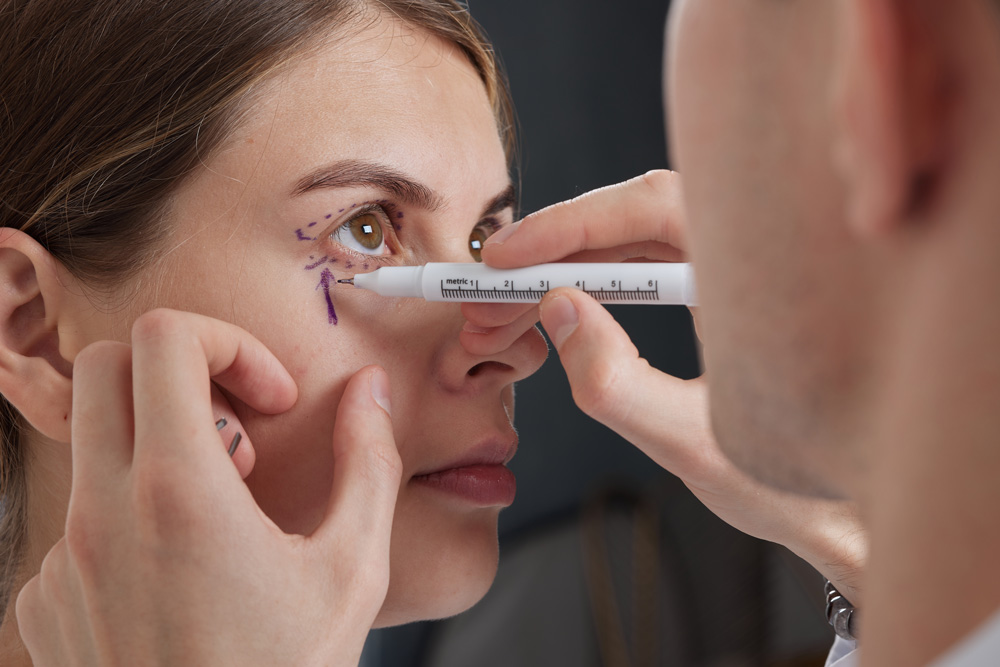
Lower Eyelid Surgery to Correct Dry Eyes: The Procedure
The procedure is typically performed under local anaesthesia. Lower eyelid surgery to correct dry eyes takes thirty to sixty minutes per eye. Sedation is available for patient comfort. The incisions are small. They are placed at the outer corner of the eye or along the lower lid margin. Lower eyelid surgery involves tightening, repositioning or grafting depending on the specific problem. Sutures are placed to secure the corrected position. The procedure is performed as day surgery. Most patients go home within an hour. Lower eyelid surgery recovery involves mild swelling and bruising for one to two weeks. Sutures are removed at seven to fourteen days. Lubricating eye drops are used frequently during the first few weeks. The corrected eyelid position is visible immediately. The full benefit to tear function develops over several weeks as swelling resolves and the lid settles into its final position.
Lower Eyelid Surgery to Correct Dry Eyes: Expected Results
Results depend on the underlying cause and its severity. Lower eyelid surgery to correct dry eyes from ectropion produces significant improvement in the majority of patients. The lid contacts the eye again. Tears coat the surface. Dryness symptoms reduce substantially. Lower eyelid surgery to correct dry eyes does not cure all dry eye disease. If the dry eyes have multiple contributing factors, lid surgery addresses only the structural component. Meibomian gland dysfunction, autoimmune conditions and environmental factors may continue causing symptoms alongside improved lid position.
Lower eyelid surgery produces the most dramatic improvement when the lid malposition was the primary cause. Patients whose dryness began when the eyelid position changed typically see the strongest results. Those with longstanding dry eye from multiple causes may notice improvement but not complete resolution. The ophthalmologist discusses realistic expectations during consultation. Understanding what lid surgery can and cannot achieve supports the most appropriate treatment plan.
When Lower Eyelid Surgery to Correct Dry Eyes Is Not Appropriate
Not all dry eyes benefit from surgery. Lower eyelid surgery is only appropriate when a structural eyelid problem contributes to the condition. Many patients have dry eyes with normal eyelid position. Their dryness is caused by reduced tear production, meibomian gland dysfunction or environmental factors. Lower eyelid surgery in these patients would not improve symptoms. The assessment must identify the structural component clearly. An ophthalmologist or oculoplastic specialist evaluates eyelid position, tear break-up time and corneal surface health. Lower eyelid surgery is recommended only when the examination confirms that lid malposition is contributing to the dryness. Patients with normal lid position should pursue non-surgical dry eye management. Artificial tears, warm compresses, omega-three supplementation and prescription anti-inflammatory drops are effective for non-structural dry eye.
Lower Eyelid Surgery to Correct Dry Eyes After Cosmetic Blepharoplasty
A specific subset of patients develops dry eyes after cosmetic lower blepharoplasty. Over-resection of skin pulls the lower lid downward. The lid sits away from the eye. Tears cannot coat the surface. Lower eyelid surgery after previous cosmetic surgery is a revision procedure. It involves releasing scar tissue and repositioning the lid. Skin grafting may be necessary to replace the tissue that was over-resected. Lower eyelid surgery in this context is more complex than primary lid tightening. Scar tissue changes the anatomy. The revision surgeon must work within an already-operated field. Choosing an experienced oculoplastic surgeon for this type of revision is essential. Lower eyelid surgery after cosmetic surgery produces meaningful improvement. The lid returns to its correct position. Tear function improves. However, the result may not be identical to the pre-surgical state. Realistic expectations about the degree of correction achievable support patient satisfaction.
Lower Eyelid Surgery to Correct Dry Eyes in Turkey
Turkey offers lower eyelid surgery at competitive pricing. Experienced oculoplastic surgeons perform the procedure at accredited facilities. Lower eyelid surgery in Turkey is available within all-inclusive packages. Consultation, surgery, accommodation and aftercare are covered. Remote consultation before travel allows thorough assessment. Photographs and symptom history help the surgeon evaluate whether eyelid malposition is contributing to dryness. Lower eyelid surgery planning is completed before the patient travels. This ensures the procedure addresses the specific structural concern identified during assessment.
Conclusion
Lower eyelid surgery to correct dry eyes is effective when eyelid malposition contributes to the condition. Ectropion, entropion, lid laxity and post-blepharoplasty complications are the most common indications. The surgery repositions the lid against the eye surface. Tear function improves. Symptoms reduce. Lower eyelid surgery does not address non-structural causes of dryness. Assessment by an ophthalmologist or oculoplastic specialist determines suitability. Professional consultation ensures the right treatment for each patient. Turkey offers the procedure at competitive pricing with experienced specialists.
For more information about eyelid surgery and to book a consultation visit the ACIBADEM Beauty CenterAesthetics page.
Introduction
Dry eyes are a common and frustrating condition. Many people manage symptoms with drops and lifestyle changes. However, some cases of dry eye have a structural cause related to the lower eyelid. When the eyelid does not close properly or sits too low, tears cannot coat the eye surface effectively. Lower eyelid surgery to correct dry eyes addresses these structural problems. Understanding when eyelid surgery can help and when it cannot helps patients pursue the right treatment. This article explains how eyelid position affects tear function and when surgery is an appropriate solution.
How the Lower Eyelid Affects Tear Function
The lower eyelid plays a critical role in tear distribution. It holds the tear film against the eye surface. The punctum, a tiny drainage opening in the inner corner of the lower lid, removes excess tears. When the lower eyelid sits in its correct position, tears coat the cornea evenly. The eye stays moist and comfortable. Lower eyelid surgery becomes relevant when this mechanism is disrupted. Eyelid malposition prevents normal tear dynamics. The tear film breaks up. The eye surface dries out. Symptoms include burning, gritty sensation, watering, redness and blurred vision. Paradoxically, dry eyes can cause excessive watering. The eye produces reflex tears in response to surface dryness. These reflex tears are watery and do not provide adequate lubrication. Lower eyelid surgery restores the structural position that allows the normal tear mechanism to function.
What Causes Eyelid-Related Dry Eyes?
Several conditions create eyelid-related dryness. Ectropion is the most common. The lower eyelid turns outward. It no longer contacts the eye surface. Tears cannot coat the cornea effectively. Lower eyelid surgery to correct dry eyes caused by ectropion repositions the lid against the eye. Entropion is the opposite condition. The lid turns inward. The lashes rub against the cornea. This causes irritation and secondary dryness. Lower eyelid surgery from entropion rotates the lid outward to its normal position. Eyelid laxity from ageing weakens the lid support. The lid sags away from the eye. The tear film breaks up. Lower eyelid surgery from laxity tightens the lid structure. Previous cosmetic blepharoplasty can occasionally cause ectropion if too much skin was removed. The lid is pulled downward. Lower eyelid surgery after previous cosmetic surgery is a revision procedure. It releases the scar tissue and restores lid position.
How Lower Eyelid Surgery to Correct Dry Eyes Works
The surgical approach depends on the specific cause. Lower eyelid surgery to combat ectropion typically involves a lateral tarsal strip procedure. The surgeon tightens the lid at its outer attachment point. The lid is shortened and repositioned snugly against the eye. Lower eyelid surgery restores the contact between lid margin and globe. The tear film coats the surface again. The punctum sits in its correct drainage position. Lower eyelid surgery to correct entropion involves sutures or tissue repositioning that rotate the lid outward. The lashes no longer contact the cornea. Irritation resolves. Tear function normalises. Lower eyelid surgery for addressing laxity combines tightening with repositioning. The surgeon evaluates the specific anatomy. The procedure is tailored to the individual cause. Experienced oculoplastic surgeons assess eyelid position precisely and select the most appropriate technique for each patient.
Lower Eyelid Surgery to Correct Dry Eyes: The Procedure
The procedure is typically performed under local anaesthesia. Lower eyelid surgery to correct dry eyes takes thirty to sixty minutes per eye. Sedation is available for patient comfort. The incisions are small. They are placed at the outer corner of the eye or along the lower lid margin. Lower eyelid surgery involves tightening, repositioning or grafting depending on the specific problem. Sutures are placed to secure the corrected position. The procedure is performed as day surgery. Most patients go home within an hour. Lower eyelid surgery recovery involves mild swelling and bruising for one to two weeks. Sutures are removed at seven to fourteen days. Lubricating eye drops are used frequently during the first few weeks. The corrected eyelid position is visible immediately. The full benefit to tear function develops over several weeks as swelling resolves and the lid settles into its final position.
Lower Eyelid Surgery to Correct Dry Eyes: Expected Results
Results depend on the underlying cause and its severity. Lower eyelid surgery to correct dry eyes from ectropion produces significant improvement in the majority of patients. The lid contacts the eye again. Tears coat the surface. Dryness symptoms reduce substantially. Lower eyelid surgery to correct dry eyes does not cure all dry eye disease. If the dry eyes have multiple contributing factors, lid surgery addresses only the structural component. Meibomian gland dysfunction, autoimmune conditions and environmental factors may continue causing symptoms alongside improved lid position.
Lower eyelid surgery produces the most dramatic improvement when the lid malposition was the primary cause. Patients whose dryness began when the eyelid position changed typically see the strongest results. Those with longstanding dry eye from multiple causes may notice improvement but not complete resolution. The ophthalmologist discusses realistic expectations during consultation. Understanding what lid surgery can and cannot achieve supports the most appropriate treatment plan.
When Lower Eyelid Surgery to Correct Dry Eyes Is Not Appropriate
Not all dry eyes benefit from surgery. Lower eyelid surgery is only appropriate when a structural eyelid problem contributes to the condition. Many patients have dry eyes with normal eyelid position. Their dryness is caused by reduced tear production, meibomian gland dysfunction or environmental factors. Lower eyelid surgery in these patients would not improve symptoms. The assessment must identify the structural component clearly. An ophthalmologist or oculoplastic specialist evaluates eyelid position, tear break-up time and corneal surface health. Lower eyelid surgery is recommended only when the examination confirms that lid malposition is contributing to the dryness. Patients with normal lid position should pursue non-surgical dry eye management. Artificial tears, warm compresses, omega-three supplementation and prescription anti-inflammatory drops are effective for non-structural dry eye.
Conclusion
Lower eyelid surgery to correct dry eyes is effective when eyelid malposition contributes to the condition. Ectropion, entropion, lid laxity and post-blepharoplasty complications are the most common indications. The surgery repositions the lid against the eye surface. Tear function improves. Symptoms reduce. Lower eyelid surgery does not address non-structural causes of dryness. Assessment by an ophthalmologist or oculoplastic specialist determines suitability. Professional consultation ensures the right treatment for each patient. Turkey offers the procedure at competitive pricing with experienced specialists.
For more information about eyelid surgery and to book a consultation visit the ACIBADEM Beauty Center Aesthetics page.
Frequently Asked Questions
Yes, when eyelid malposition is contributing to the dryness. Not all dry eyes have a structural cause.
Ectropion, entropion, lid laxity and over-resection from previous cosmetic blepharoplasty.
One to two weeks for swelling and bruising. Full tear function improvement develops over several weeks.
Possibly. If multiple factors contribute to dryness, drops may still be needed alongside improved lid position.
Results last years. Ageing may cause gradual lid laxity recurrence requiring repeat tightening eventually.